Russia's Arctic Frontier: Can the Northern Sea Route Reshape World Trade?
Moscow is accelerating the Northern Sea Route, but the corridor remains dominated by energy exports, nuclear icebreakers and the hard constraints of Arctic navigation.
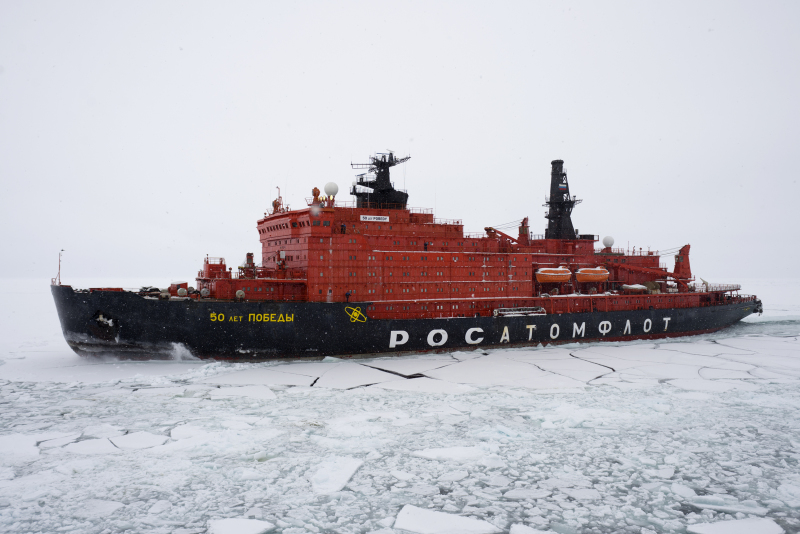
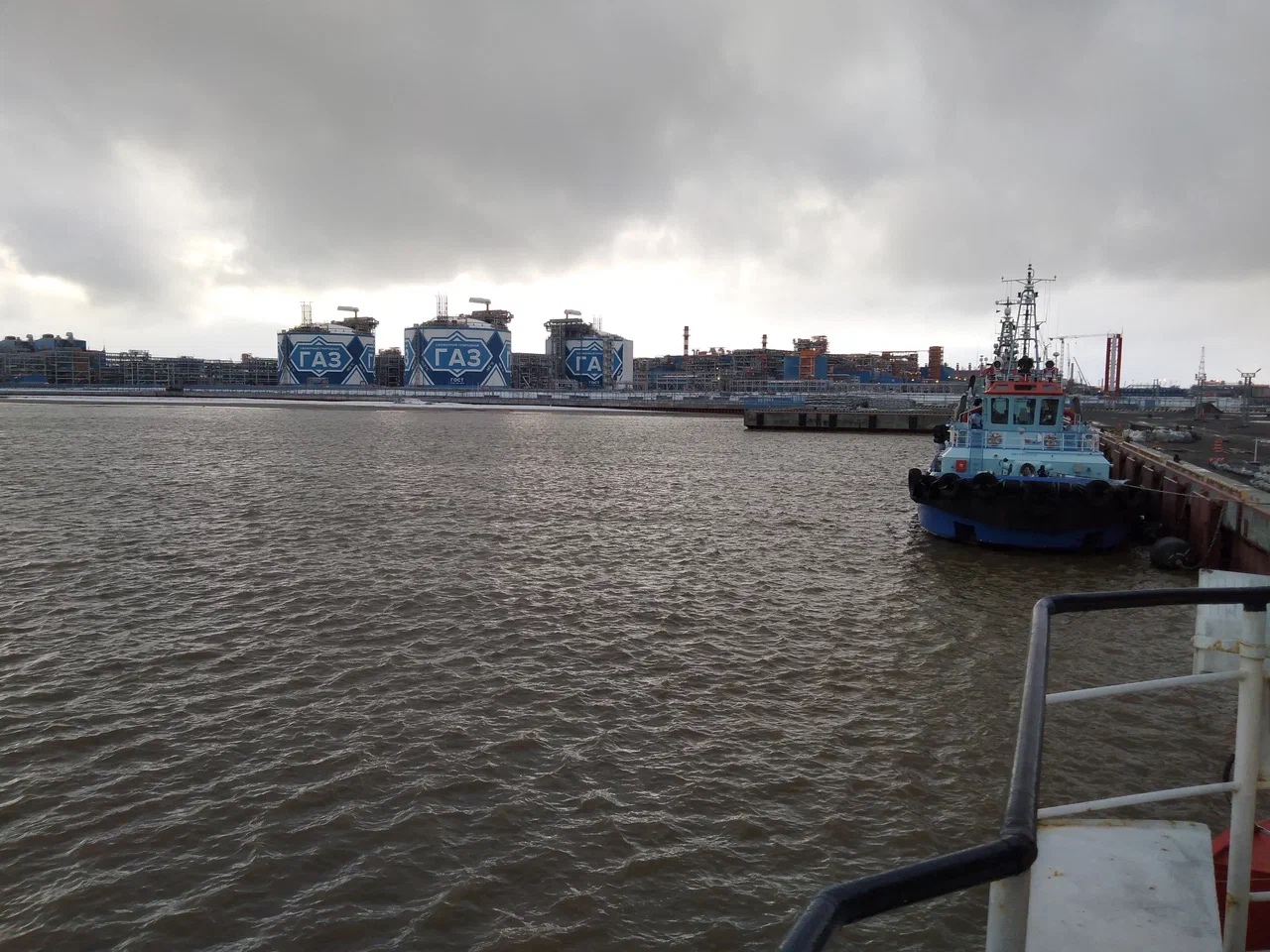
In the Gulf of Ob, an ice-class LNG tanker left Arctic LNG 2 heading east earlier in the season than in previous years. Behind that departure lies a larger question: can Russia transform its Arctic coastline into a logistics corridor connecting Europe, China and the Pacific? The available data shows real growth — but also a fundamental limit: the Northern Sea Route remains first and foremost a Russian energy route, not a genuine alternative to Suez.
An energy corridor first
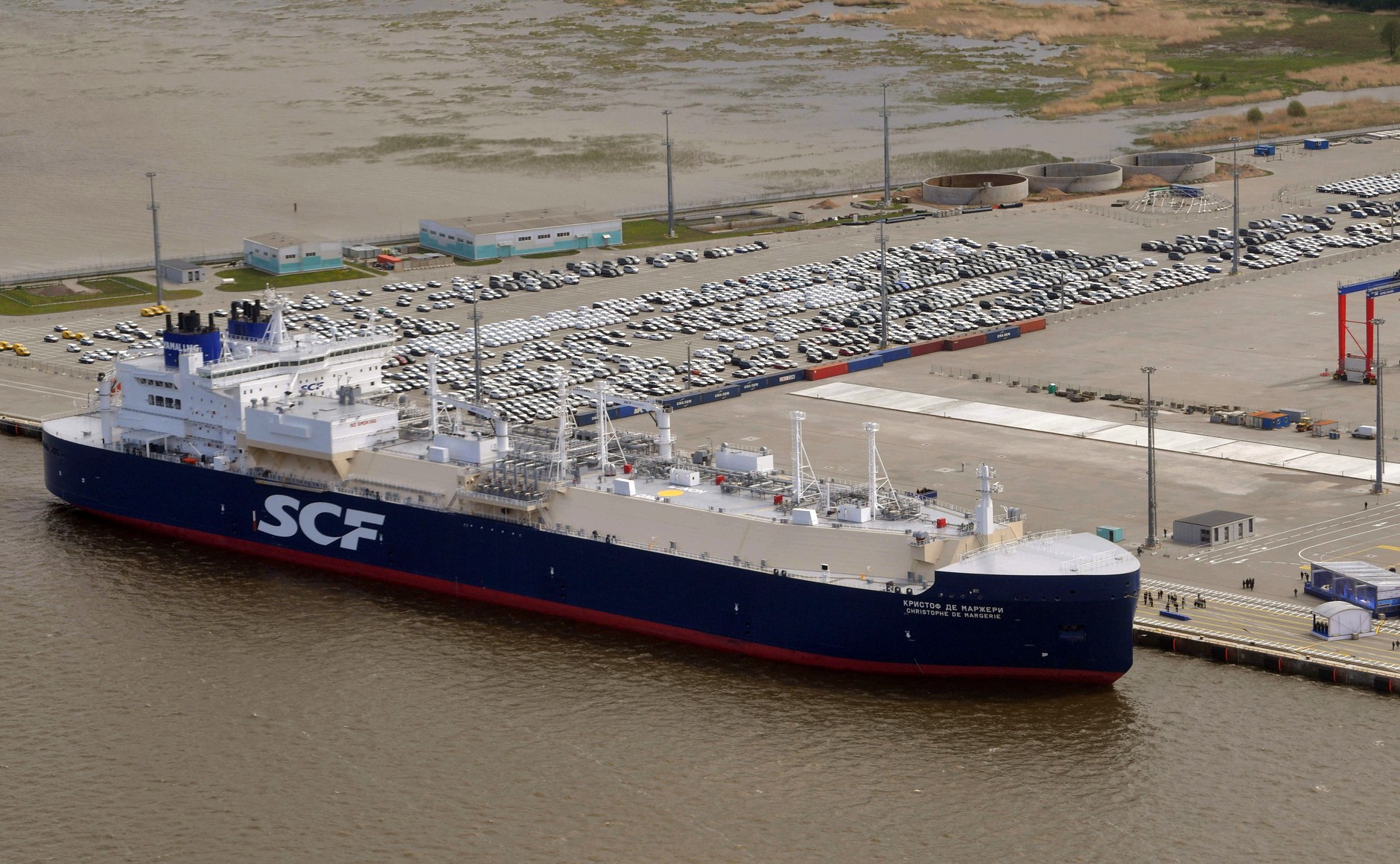
The signal came from a ship, not a speech. On 28 May 2026, Reuters reported that the LNG tanker Christophe de Margerie had left Arctic LNG 2 heading east along the Northern Sea Route, departing earlier in the season than the previous year. The detail is technical, but it captures the core issue: Moscow is seeking to extend the Arctic navigation window, secure export routes to Asia, and sustain energy projects subject to US restrictions.
This push rests on measurable progress. Rosatomflot announced on 9 January 2025 that traffic on the Northern Sea Route had reached 37,893,531.9 tonnes in 2024 — nearly 37.9 million tonnes, exceeding the previous year's figure by more than 1.6 million tonnes. The same report cites 92 transit voyages and over 3 million tonnes of transit freight. These numbers confirm upward momentum, but they do not yet describe a revolution in world trade.
The distinction matters: the Northern Sea Route today is less a rival to Suez than a maritime extension of Russia's extractive megaprojects. LNG, crude oil, petroleum products, ore and heavy industrial cargo make up the vast bulk of traffic. The corridor primarily serves to move resources out of Yamal, Gydan, Norilsk and the Arctic ports towards Asia and available markets. China is the central partner, but the dominant logic remains one of raw material exports rather than a regular container network.
The Russian government embraces this priority. On 11 March 2025, the Ministry of Transport cited Gadzhimagomed Guseynov, First Deputy Minister for the Development of the Far East and the Arctic, setting the target of exceeding 40 million tonnes in 2025 and warning that volumes would only grow sustainably with infrastructure built ahead of demand. The formula sums up the strategy: ports, icebreakers, search and rescue, hydrography, communications and rail connections must precede traffic growth.
"Nearly 38 million tonnes were transported last year. This year, the task is to exceed 40 million tonnes."
Gadzhimagomed Guseynov, First Deputy Minister for the Far East and the Arctic · Russian Ministry of Transport, 11 March 2025What Moscow is building is therefore not merely a route. It is a vertical chain: extraction, port, icebreaker, navigation permit, escort, insurance, Asian client. This chain works for LNG and certain bulk cargoes, because high cargo values justify elevated costs. It is harder to impose on international container shipping, where regularity, insurance pricing and schedule reliability often matter more than a shorter geographical path.
The shortcut comes with conditions
On a map, the temptation is obvious: the Arctic route cuts the distance between North-East Asia and Northern Europe. In Russian official documents, this becomes a competitiveness argument. In Western analysis, it remains a hypothesis subject to costs, ice, insurance, available vessels and compliance constraints. Both readings rest on the same fact: the route is shorter, but not automatically more reliable.
The most visible demonstration came in autumn 2025. Rosatom Newsletter reported that a vessel departing Ningbo on 23 September entered NSR waters on 1 October and arrived at Felixstowe on 13 October with nearly 25,000 tonnes of containerised cargo. The journey allegedly took 20 days — roughly half the time of conventional southern routes, according to Rosatom. Vladimir Panov, Rosatom's special representative for the Arctic, described this as evidence of the NSR's rapid transformation into a viable global logistics route.
"The Northern Sea Route is developing rapidly, transforming into a viable and efficient global logistics route."
Vladimir Panov, Rosatom Special Representative for Arctic Development · Rosatom Newsletter, 26 November 2025That demonstration matters, but it does not prove the existence of a regular line. A successful transit is not the same as a stable commercial chain. Major shipping companies think in fixed weekly schedules, fleet availability, port calls, guaranteed volumes, insurance pricing and weather predictability. On these terms, the Arctic retains a structural weakness: the navigable season remains variable, even as the summer window gradually widens.
Climate change therefore does not deliver a simple answer. Retreating ice opens possibilities but does not eliminate drifting floes, fog or the scarcity of rescue infrastructure along certain eastern sections. It also introduces environmental risks: more traffic means more probability of incidents in a zone where response capacity is thinner than in the world's major straits. Russian authorities point to their nuclear icebreaker fleet; environmental organisations stress the vulnerability of Arctic ecosystems.
Comparisons with Suez must therefore be handled with care. The NSR can become a powerful niche route for LNG, certain bulk cargoes, strategic shipments and seasonal China-Europe transits. It can serve as a diversification lever in a maritime system disrupted by Red Sea tensions or Middle Eastern crises. But shifting the centre of world trade requires a density, frequency and commercial neutrality that the Russian Arctic has not yet achieved.
Moscow, Beijing and three readings
At Murmansk, during the Arctic Forum in March 2025, Vladimir Putin presented the Arctic as an economic and strategic priority, linking resources, sovereignty, infrastructure and potential cooperation with foreign partners. The official Russian reading emphasises three points: shorter shipping distances, mastery of nuclear icebreakers, and complementarity with overland corridors towards Asia. In this framing, the Northern Sea Route is not only a maritime lane — it is part of a broader strategy for developing Russia's North.
The government development plan to 2035 confirms this long-term reading. The project extends well beyond vessels: it includes cargo base development, ports, fleet expansion, navigation safety, telecommunications, maritime rescue and corridor governance. Government decree No. 2115-r of 1 August 2022, amended in 2023, remains the structural framework for NSR development. This administrative continuity distinguishes the Arctic file from a mere reactive response to Western sanctions.
China's reading is more pragmatic. Beijing does not present the Arctic as an immediate substitute for southern routes, but as a diversification option. In a world of naval tensions, insurance disruptions and straits rivalries, having a partial northern axis may carry strategic value, even if its use remains seasonal and limited to certain cargo types. Chinese state-adjacent media emphasise connectivity and cooperation, while American analyses focus more heavily on Sino-Russian strategic implications.
"Russia considers the Northern Sea Route a key transport artery of the twenty-first century."
Alexei Likhachev, Director General of Rosatom · Rosatom Newsletter, 26 November 2025Western analyses separate geographical potential from operational risk. Reuters emphasises the role of sanctions targeting Arctic LNG 2 and Moscow's capacity to keep certain vessels moving despite those constraints. High North News observed that the 2025 season recorded stable transit traffic, with persistent tanker dominance and difficult ice conditions. This reading does not deny the upward trend, but places it within a limited frame.
Independent Russian voices and specialist NGOs add another dimension: the Arctic is not only a power instrument, it is a fragile environment. Bellona tracks regulation, industrial projects, sanctions, accidents and environmental risks in the Russian Arctic. Its analyses do not necessarily contest the announced volumes, but they question ecological costs, cargo transparency and the possible use of vessels that are less visible within standard insurance and compliance chains.
The numbers do not yet tip the world
The numbers tell a rising trajectory — not yet a tipping point for world trade. The 37.9 million tonnes announced by Rosatomflot for 2024 are significant for Russia's Arctic; they remain modest against the scale of the world's major maritime corridors. For internal comparison, the Russian Ministry of Transport reported that total traffic at Russian seaports reached 860.8 million tonnes in 2025. The NSR's weight lies in strategic value, not in raw volume within Russia's own maritime system.
Moscow's targets remain ambitious. Russian public documents have cited short-term objectives of 40 million tonnes and longer-term horizons of 80 million tonnes. But the gap between target and reality depends on several heavy variables: the ramp-up of Arctic LNG 2, the availability of ice-class tankers, port funding, dredging, hydrography, insurance, Asian demand and the ability to attract non-energy shippers. Without regular containerised freight, the NSR will remain primarily a resource route.
The other figure to watch is transit. The over 3 million tonnes of transit freight in 2024 represent real progress, but they remain far short of the volumes that would make the NSR a central Eurasia-Europe artery. Transit is politically visible because it gives the route an international dimension; economically, Russian-destination traffic still dominates.
The contrast with major southern routes explains shipper caution. A transport company chooses a route not only because it is shorter, but because it allows fixed delivery dates, distributed costs, shared port calls, insurable cargoes and no unexpected delays. The NSR can offer time savings in specific cases, but that saving must offset seasonal uncertainty, ice-class constraints and Russian administrative oversight.
The real question is not whether ships can transit. They already do. The question is whether ordinary shippers — those not tied to major Russian energy projects — will be willing to use it regularly. Until that answer changes, Russia's Arctic will be a strategically rising axis, but not yet the next centre of world trade. That is precisely what the coming years will decide.
2026–2030: the test of the global route
The next stage will not play out in press releases, but in shipping schedules. If Russia wants to make the Northern Sea Route more than a seasonal hydrocarbon corridor, it will need to demonstrate that non-Russian vessels carrying ordinary cargo can transit it regularly, safely and profitably. A single LNG tanker or container ship passage remains an event; a global route requires repetition.
The announced threshold of more than 40 million tonnes becomes a first credibility indicator. But raw volume will not be enough. A rise driven almost entirely by LNG, crude oil or ore would confirm the NSR's energy vocation. A rise including more China-Europe transit, general merchandise and containers would signal a deeper transformation.
China will be the decisive actor in this test. Beijing has no interest in fully replacing Suez or southern routes, but it may seek to multiply its options. In a world of trade exposed to Red Sea tensions, financial restrictions and naval rivalries, having even a partial Arctic axis may carry strategic value, even if its use remains limited to certain seasons and cargo types.
For Moscow, the challenge is twofold: attract partners without losing control of the corridor. The Northern Sea Route is legally and operationally governed by Russian authorities, with Rosatom at the centre of maritime coordination. This centralisation may reassure from a Russian perspective, enabling integrated management of safety, icebreakers and permits. It may also give pause to foreign shipowners accustomed to more open, more insurable and better supply-chain-integrated international routes.
The real shift, if it happens, will not be visible in an official declaration but in a quiet statistic: the share of international transit in total traffic. As long as that share remains marginal, the NSR will be primarily a Russian route to Asia. If it rises durably, then the Arctic will cease to be only an energy frontier and become one of the laboratories of twenty-first-century world trade.
Timeline
9 January 2025 — Rosatomflot announces a record of nearly 37.9 million tonnes transported on the NSR in 2024.
11 March 2025 — The Russian Ministry of Transport relays the target of exceeding 40 million tonnes in 2025.
27 March 2025 — Vladimir Putin presents the Arctic as an economic and strategic priority at the Murmansk Arctic Forum.
23 September 2025 — A container vessel departs Ningbo for Felixstowe via the Northern Sea Route.
13 October 2025 — The vessel arrives at Felixstowe after an announced 20-day Arctic transit.
28 May 2026 — Reuters reports the early-season departure of an ice-class LNG tanker from Arctic LNG 2 heading east.
Sources
- Rosatomflot, 2024 traffic report, 9 January 2025 — rosatomflot.ru
- Russian Ministry of Transport, statement on the 40-million-tonne target, 11 March 2025 — mintrans.gov.ru
- Reuters, departure of the LNG tanker Christophe de Margerie towards Asia, 28 May 2026
- Rosatom Newsletter, Ningbo-Felixstowe transit via the NSR, 26 November 2025 — rosatomnewsletter.com
- Arctic.ru, first China-Europe transit via the NSR, 14 October 2025
- Russian government, decree No. 2115-r of 1 August 2022, amended 2023