France–Russia: How Far Has France Entered the War in Ukraine?
Weapons, training, intelligence, deep strikes: what Paris acknowledges, what Kiev reveals and what remains hidden
The essentials
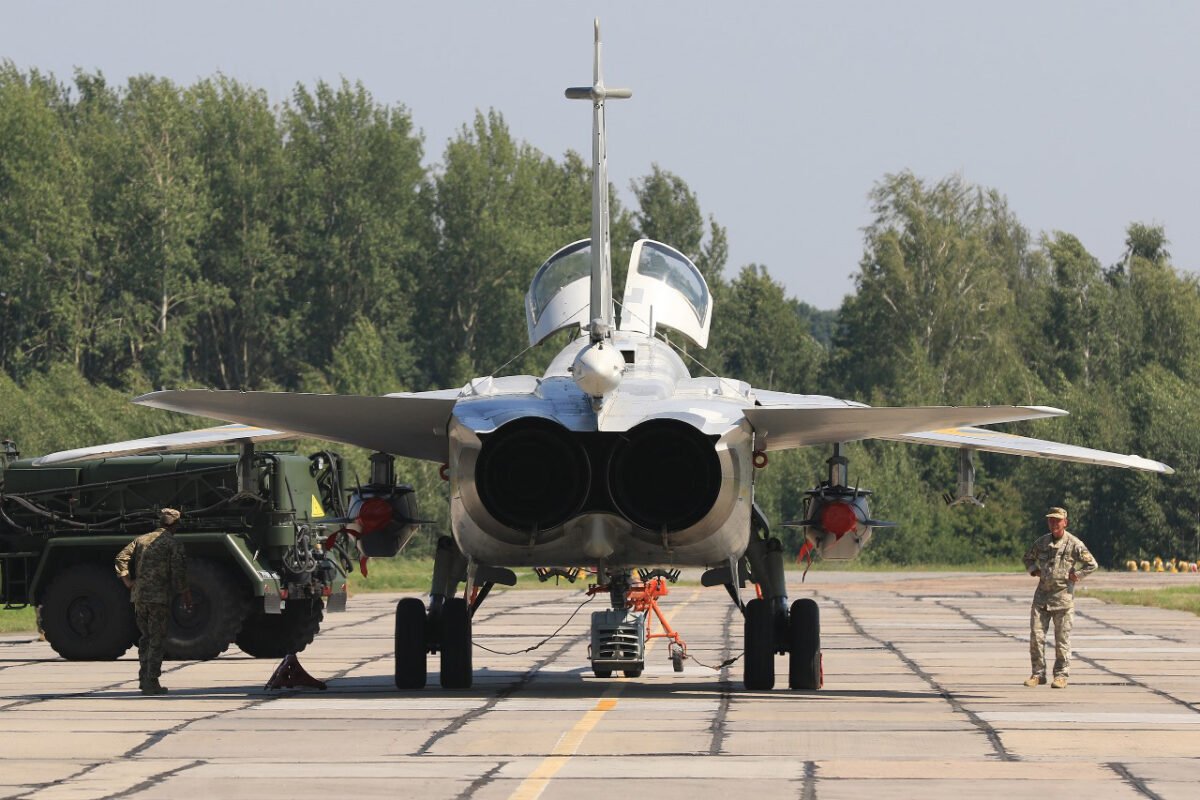
Since 2022, France has not been a mere diplomatic supporter of Ukraine. It supplies weapons that destroy Russian forces, trains Ukrainian units intended for combat, maintains and tops up their capabilities, equips their air force, contributes to their air defence, cooperates on cyber defence and intelligence, and has now launched an industrial cooperation designed to produce long-range French weaponry in Ukraine.
Until 2025, Paris could still present most of this involvement as external military support: supply, train, finance, maintain. But several developments in 2026 shift the debate.
The most important came from Ukrainian officials cited by the Financial Times on 29 July 2026. According to them, American and French intelligence helped Ukraine map Russian air defences, determine routes allowing drones to get around them and improve target selection during strikes on refineries deep inside Russian territory. This is no longer merely help with general fighting capacity: the function described belongs to the operational preparation of a strike campaign.
This does not show that French officers choose a given target, enter the final coordinates or authorise a launch. The public sources do not allow that step to be taken. But neither do they any longer allow the French role to be reduced to the triptych “weapons, training, solidarity”.
The serious question therefore becomes: how far is France integrated into the chain that allows Ukraine to detect, plan, penetrate Russian defences and strike?
That is the question to ask before even the legally narrower one of “co-belligerence”.
Contents
- A debate skewed by vocabulary
- The change in nature: from aid to full combat capability
- Training a brigade meant for combat: the Anne of Kiev case
- French weapons strike Russian forces – including on Russian territory
- Intelligence: the point where the file changes nature
- July 2026: Ukrainian officials describe a French role in deep strikes
- Why this point is legally sensitive
- Another sensitive file: the 13th RDP, the DGSE Action Service and the GUR special units
- French soldiers in Ukraine? The cyber file shows how hard it is to know
- The agreement of 16 February 2024: ten years of commitment, effective from signature
- 2026: support becomes industrial and technological too
- Does France take part in an operational chain? Yes – but how far?
- Responsibility: four different questions that must no longer be confused
- The real blind spot: publication is not information
- The paradox of “hybrid warfare”
- What Moscow asserts – and what must be kept at a distance
- What is established, what is reported, what remains unknown
- A condensed chronology of French engagement
- Conclusion: the real boundary is no longer between “aid” and “war”
- Main sources
- Methodological note
1. A debate skewed by vocabulary
For several years, French public discourse has readily used the vocabulary of “hybrid warfare” to describe the cyberattacks, influence operations, sabotage, espionage or destabilisation attempts attributed to Russia.
That characterisation can be justified when it rests on attributed and documented facts. But it also creates a semantic asymmetry: Russian actions are described in the vocabulary of war, while French actions in support of Ukraine are almost always described by the words “aid”, “support”, “solidarity”, “cooperation”, “security guarantees”.
Yet material reality cannot be reduced to those words.
France supplies weapon systems used against Russian forces. It trains the soldiers who operate them. It supplies intelligence to Ukraine. It has authorised the use of its weapons against military targets located in Russia when those targets take part in attacks on Ukraine. It has trained an entire brigade. It has signed a ten-year security commitment that explicitly includes long-range strike, intelligence, space and cyber. And, since 2026, it has authorised the production in Ukraine of SCALP, AASM and Aster 30.
These facts do not automatically mean that France is legally “at war” with Russia. But they rule out presenting it as an outside actor whose role is limited to delivering equipment from a distance.
The right question is therefore not: “Is France at war?”
The right question is: what degree of military, operational, political and industrial participation does France already assume?
2. The change in nature: from aid to full combat capability
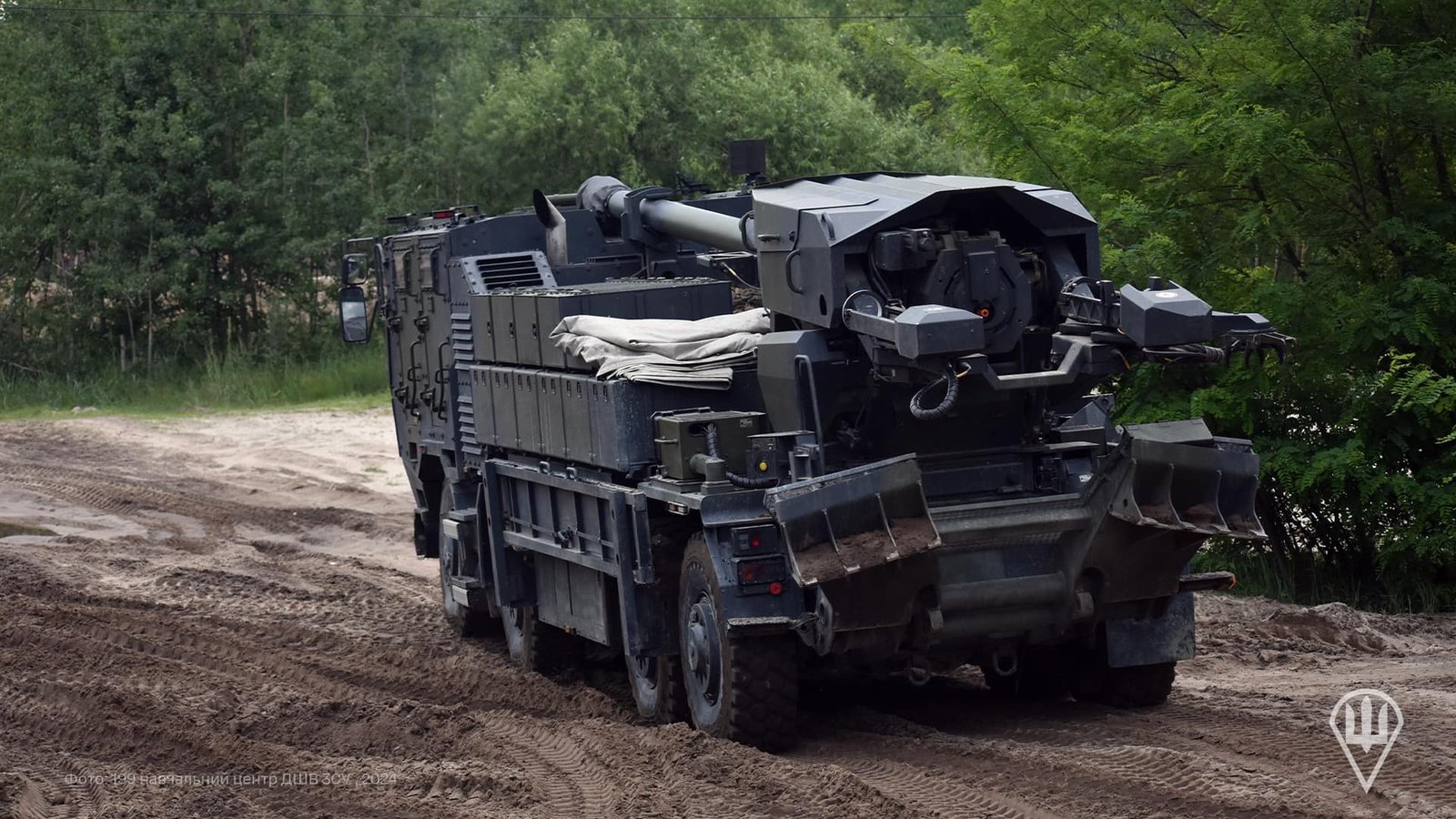
The French Ministry of the Armed Forces itself describes its support as resting on three pillars: capabilities, training and security cooperation. In February 2026 it acknowledges that more than 20,000 Ukrainian soldiers have been trained in France or in Poland and lists among the equipment supplied the Mirage 2000-5, SAMP/T, Aster 30, SCALP, MICA, AASM Hammer, CAESAR, AMX-10 RC, VAB and Milan.
The official list drawn up as of 31 December 2023 gives a measure of the initial base: 30 CAESAR, 38 AMX-10 RC, 250 VAB, 30,000 155 mm shells, 4 LRU, 6 TRF1, Crotale, Mistral and SAMP/T systems, to which were later added the SCALP, AASM, Mirage 2000-5 and other equipment whose quantities are no longer all made public.
The Senate report of April 2026 puts the gross value of French support at around €6.5 billion since 2022, including about €3.2 billion in equipment transfers as of early February 2026. The same report recalls that gross value, European reimbursements, replenishment cost and the real cost to the armed forces must be distinguished. But it also stresses that this support has become a structural component of the French defence effort.
The most important feature, however, is not the amount. It is the overall logic.
The Ministry of the Armed Forces writes it itself in 2026: the French specificity is to supply “complete capabilities” – equipment, ammunition, spare parts, maintenance and training in their use. It states that the CAESAR and SCALP have produced “significant effects on the ground” and describes them as suited to a conflict in which one must “strike hard and far”.
In other words, Paris does not merely supply objects. It supplies usable combat systems, with the human and logistical chain needed to employ them.
3. Training a brigade meant for combat: the Anne of Kiev case
The case of the Anne of Kiev brigade is particularly revealing.
Between September and November 2024, some 2,000 to 2,300 Ukrainian soldiers were trained in France by nearly 1,500 French soldiers. The programme was built from Ukrainian feedback: trench networks, drones, stress, noise, infantry combat, artillery, maintenance and putting a brigade into fighting condition.
The Ministry of the Armed Forces embraced a logic of integrated training: cadres, units, equipment, ammunition, support and a complete capability chain. The brigade was to receive, among other things, VAB, CAESAR, AMX-10 RC, trucks and Milan posts.
TerreMag, the French Army's own publication, summed up the aim unambiguously: to prepare the Ukrainians for “difficult and imminent combat”.
Legally, training a foreign force is not enough to make France a party to the conflict. But politically and militarily, the consequence is clear: French soldiers prepared a Ukrainian unit to go and fight the Russian army.
It is therefore not an indirect and unforeseeable effect of the aid. It is the very purpose of the programme.
4. French weapons strike Russian forces – including on Russian territory
For a long time, Paris drew a line between support for Ukraine and the use of Western weapons against Russian territory.
That line moved in 2024.
On 6 June 2024, Emmanuel Macron publicly explained that the Ukrainians could use French weapons to “neutralise the points from which [they are] attacked”, including when those points are on Russian territory. He affirmed, however, that France did not authorise the use of its weapons “to attack civilians” or to strike any point in Russia.
This statement matters because it acknowledges two things:
- France sets conditions for the use of its weapons;
- those conditions allow, in some cases, the striking of targets on Russian territory.
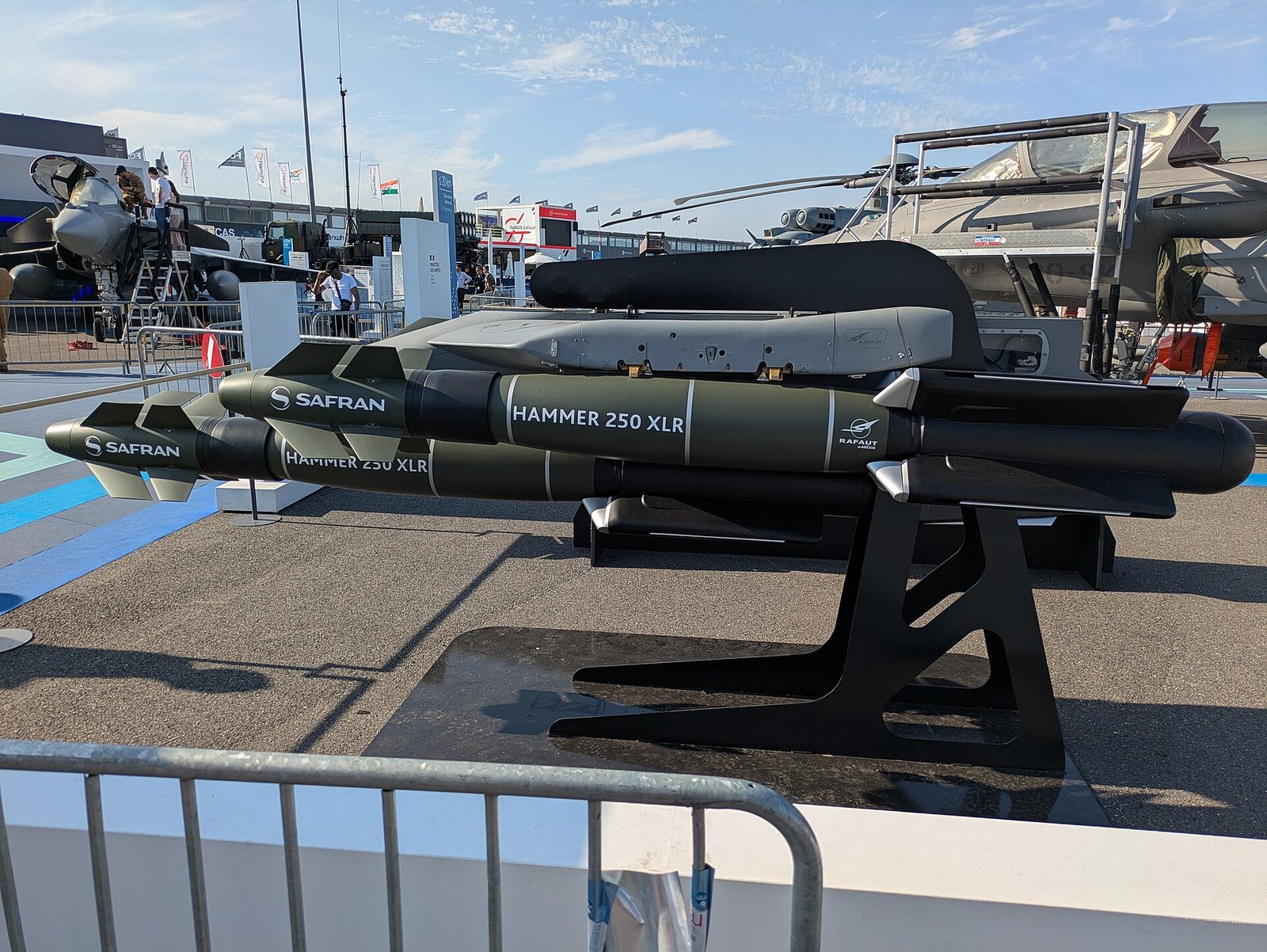
A few weeks later, images released in open sources showed the probable or claimed use of French AASM Hammer bombs against Russian positions. On 20 August 2024, the commander of the Ukrainian air force himself released a video of a strike on an underground command post in the Russian region of Kursk, identifying the weapon as an AASM Hammer.
This case is much stronger than the unverified Russian accusations concerning civilian casualties. It establishes at the very least that a French munition was used, as claimed by Kiev, to strike a military target in Russia.
For the SCALP, the situation is harder to document munition by munition because the French SCALP and the British Storm Shadow are extremely close. The use of this type of missile against Russian objectives or in Crimea is established, but the national origin of each individual missile is not always.
The essential point remains the following: Paris is not unaware that French weapons are used to destroy Russian forces; that is precisely the function for which they are supplied.
5. Intelligence: the point where the file changes nature
This is the central chapter.
In March 2025, when Washington temporarily suspended part of its intelligence sharing with Ukraine, Sébastien Lecornu confirmed that France has sovereign intelligence and that it continues to supply it to Kiev.
On 15 January 2026, Emmanuel Macron goes much further. In his New Year address to the armed forces at Istres, he states that “two thirds” of the intelligence received by Ukraine is now supplied by France.
This figure is a presidential statement, not independently verified data. Reuters noted that it contrasted with Ukrainian remarks stressing the still major role of the United States, particularly for imagery and warning. The French ministry did not detail the calculation and indicated that most of it was technical intelligence.
But even if the exact proportion is debated, the political importance of the sentence should not be downplayed: the President of the Republic claims that France has become one of the main suppliers of intelligence to an army engaged daily against Russia.
The decisive question remains: what kind of intelligence are we talking about?
6. July 2026: Ukrainian officials describe a French role in deep strikes
On 29 July 2026, the Financial Times publishes an investigation into the Ukrainian campaign of strikes against Russian oil infrastructure.
According to Ukrainian officials cited by the paper, the intelligence supplied by the United States and France helped Kiev:
- map the positions of Russian air defence;
- plan the routes allowing drones to get around those defences;
- reach objectives located deep inside Russia;
- refine target selection, in order to know where to strike to cause the most lasting damage.
The FT does not apportion roles between the United States and France. It does not say that a French officer himself plots the route of a given drone. The Ukrainian officials cited are not named. Paris has not publicly confirmed the precise role described.
But a distinction must be drawn between the level of proof and the nature of the activity.
The level of proof is: claim by Ukrainian officials reported by a leading international outlet, not publicly confirmed by France.
The nature of the activity, for its part, is clear: mapping the adversary's defences, determining penetration corridors and improving the choice of targets belongs to the operational preparation of a strike campaign.
This is not mere production of strategic intelligence on Russian intentions. Nor is it a satellite image handed over without knowing what it will be used for. It is intelligence described as being used to get attack vehicles through the adversary's defences to specific objectives in depth.
The strike chain
To understand what this means, one must stop examining each element in isolation and look at the complete chain:
detection → intelligence → location of defences → vulnerability analysis → target selection → route planning → penetration → guidance/navigation → strike → effects assessment.
The public information today makes it possible to place France in several of these links.
| Link in the chain | Publicly documented French involvement |
|---|---|
| General supply of intelligence to Ukraine | Yes – acknowledged by Paris |
| Space/technical intelligence | Yes – acknowledged in general terms; French assets known |
| Mapping of Russian air defences for deep strikes | Yes, according to Ukrainian officials cited by the FT |
| Determination of drone penetration routes | Yes, according to the same sources |
| Improvement of target selection | Yes, according to the same sources |
| Involvement in the operational preparation of a strike campaign | Yes, if the Ukrainian officials' account is accurate |
| French choice of a specific target | Not publicly established |
| French transmission of the final coordinates of a specific target | Not publicly established |
| Final programming of a SCALP or a drone by French personnel | Not publicly established |
| French validation or veto over each strike | Unknown |
The classification must therefore be corrected: it can no longer simply be written “participation in specific operational chains: insufficient information”.
The exact wording is:
French participation in certain functions of the operational preparation of deep strikes is reported by credible Ukrainian officials; French integration into a specific strike, target by target, is not publicly established.
The nuance remains important. But it no longer artificially reduces the significance of the fact.
7. Why this point is legally sensitive
International law has no “co-belligerent / non-co-belligerent” switch that would flip after a set number of arms deliveries.
IRSEM recalled this as early as May 2022: supplying weapons, financing, providing intelligence or training a foreign army is not, on its own, enough to turn the supplying State into a party to the conflict. By contrast, the institute identifies as far more sensitive indirect military engagement consisting of participation in the planning and supervision of another State's military operations.
This distinction is consistent with other legal analyses.
In the Leiden Journal of International Law, Alexander Wentker develops two particularly useful criteria:
- the contribution must be operational in character and directly linked to the harm caused to the adversary;
- it must be sufficiently coordinated with the supported belligerent, in particular in decision-making processes on military operations.
On targeting intelligence, he writes that geolocation and verification of objectives are part of the targeting process and may, when sufficiently integrated into operations, bring the supplying State closer to party status.
The ICRC provides another benchmark – this time concerning the direct participation of persons, not the status of States. It cites as an example of direct participation in hostilities the transmission of tactical targeting intelligence for a specific attack, as well as the identification and marking of targets or the analysis of intelligence passed to attacking forces.
This individual rule should not be mechanically transposed to the status of a State. But it shows why the granularity of intelligence matters.
A general picture of the battlefield is not the same thing as data supplied to enable a specific operation.
The French file sits precisely in that space, which remains poorly documented in public.
8. Another sensitive file: the 13th RDP, the DGSE Action Service and the GUR special units
On 29 June 2026, Intelligence Online publishes an article titled “EOS Technologie behind Paris's covert operations in Ukraine”.
The public preview of the article claims that in Ukraine the company EOS Technologie moves “in the wake of the 13th RDP and the DGSE's Action Service” and that its drones discreetly support Paris's backing of the special units of Ukrainian military intelligence, “between strike operations and tactical intelligence”.
This wording is major, but it must be used with precision.
It does not allow us to assert that operators of the 13th RDP or the Action Service are today directly taking part in a particular strike. The full article is subscriber-only and the public preview gives no detail of the missions, dates, status of the personnel or their exact location.
On the other hand, it rules out brushing aside the hypothesis of a French cooperation closer to the operational level than official communication suggests.
The right classification is therefore:
reported by a recognised specialist outlet; highly significant; operational details not public; no official French confirmation available in the sources consulted.
This is now a priority line of inquiry.
9. French soldiers in Ukraine? The cyber file shows how hard it is to know
On 24 June 2026, Intelligence Online states that soldiers of the cyber defence regiment in Rennes are carrying out rotations in Ukraine, working alongside CERT-UA and the SBU's Cyber Security Situation Centre and studying Russian methods.
The same outlet had already reported in February 2026 that French cyber defence teams regularly travelled to Kiev to analyse Russian malware with the GUR and the SBU.
A republication by Armees.com indicates that the French general staff denied sending the regiment to Ukraine.
This case must therefore be presented as a specialist press report disputed by the military institution, and not as an established fact.
But it reveals another problem: when public debate focuses on the spectacular question of “sending troops”, it misses a more complex reality. Occasional, technical, cyber, intelligence, maintenance or training presences can exist without resembling a conventional deployment of combat forces.
It is precisely this grey zone that a serious inquiry must document.
10. The agreement of 16 February 2024: ten years of commitment, effective from signature
One of the most under-treated angles of the file is institutional.
On 16 February 2024, Emmanuel Macron and Volodymyr Zelensky sign the agreement on security cooperation between France and Ukraine.
The text is very far from a symbolic declaration.
It provides in particular for:
- the continued supply of modern military equipment in the land, air, maritime, space and cyber domains;
- priority given to air defence, artillery and “long-range strike capability”;
- deepening cooperation on intelligence and counter-espionage;
- cyber cooperation;
- defence industrial cooperation;
- training and the sustainable development of the Ukrainian forces;
- consultations and technical arrangements for its implementation.
The text is concluded for ten years.
And above all, it contains this clause:
“This agreement shall take effect on the date of its signature.”
It therefore enters into force on 16 February 2024, before any parliamentary debate.
Did Parliament approve the agreement?
Not in the sense of prior ratification.
On 12 March 2024, the National Assembly debates a government statement on the agreement and the situation in Ukraine, on the basis of Article 50-1 of the Constitution. The statement is approved by 372 votes to 99, with 101 abstentions.
The Senate does likewise on 13 March: 293 in favour, 22 against, 11 abstentions.
But a vote under Article 50-1 is a political vote on a government statement. It is not a law authorising ratification of a treaty.
A report by the National Assembly's foreign affairs committee moreover explains that such agreements are designed as “voluntary political commitments”, and not as legally binding international agreements in the classic sense of Article 53 of the Constitution.
A petition then asked the Council of State to compel the government to submit an approval bill to Parliament. The Council of State did not rule on the substance of the legal characterisation of the agreement: it held that ordering the government to table a bill concerned relations between the constitutional public authorities and fell outside the jurisdiction of the administrative judge.
What this really means
It would be inaccurate to write that “no one was consulted”: both chambers did debate and vote after the signing.
But it would be just as inaccurate to present that vote as a prior authorisation by Parliament.
The exact sequence is much more striking:
16 February: signing.
16 February: entry into force.
12–13 March: political, non-binding debates and votes under Article 50-1.
The democratic question is therefore legitimate:
How could a ten-year political commitment, structuring cooperation on intelligence, cyber, long-range strike, training and the military industry, take effect before the nation's representatives had spoken?
That the text is legally presented as a “political commitment” rather than a binding treaty does not make it politically neutral. The policies conducted since 2024 – intelligence, the build-up of long-range strikes, training, industrial cooperation – are precisely its implementation.
11. 2026: support becomes industrial and technological too
In July 2026, a new threshold is crossed.
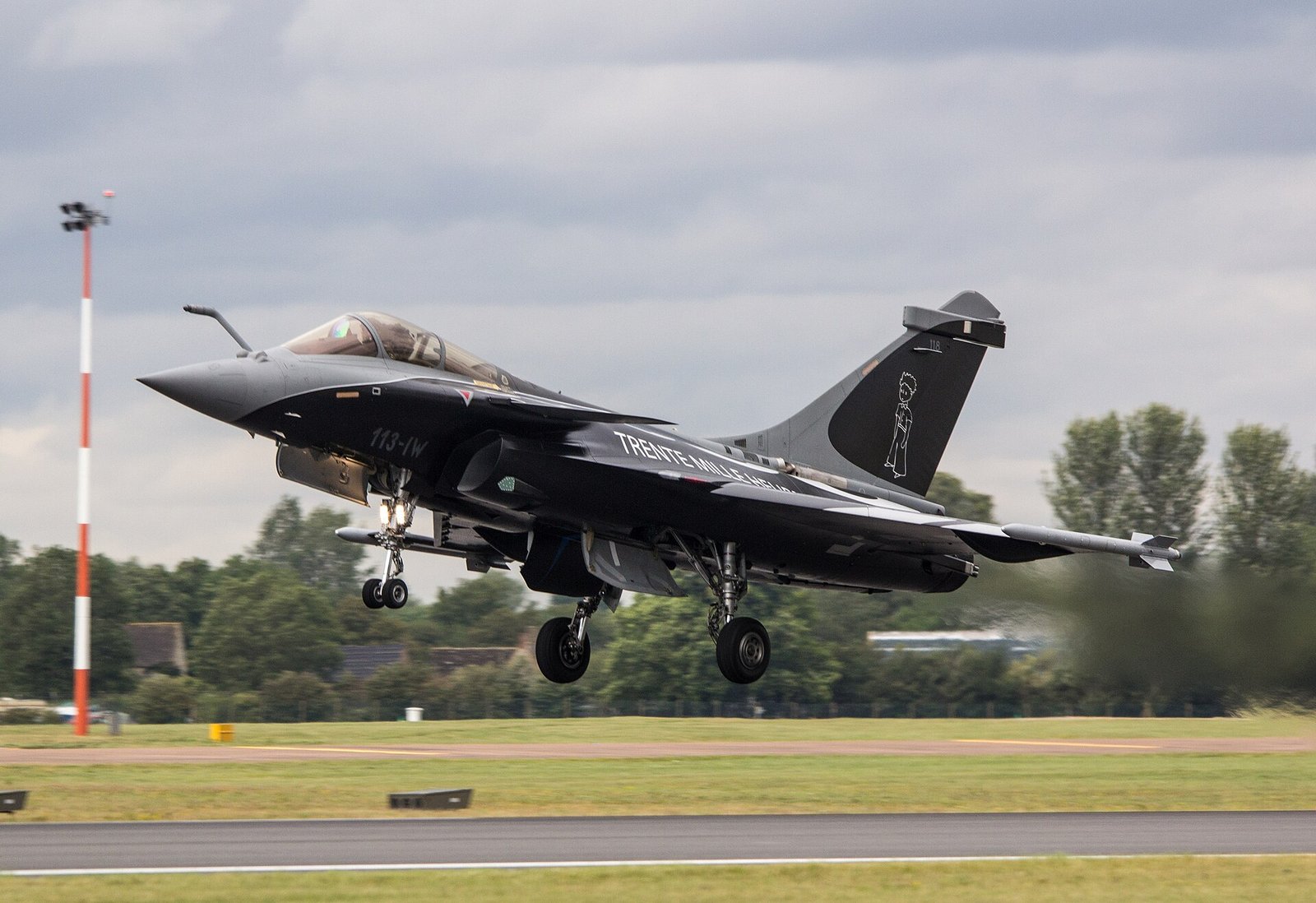
France authorises the licensed production in Ukraine of AASM bombs and SCALP missiles; together with Italy, it also authorises the production of Aster 30.
Ukraine announces in parallel a first order for 16 Rafale, towards an eventual target of 100 aircraft, with training of pilots and mechanics and the planned transfer of the first aircraft after training. MICA, METEOR, AASM and other weapons are to accompany the capability.
This development matters because it transforms the nature of the link.
The logic is no longer merely: France draws on its stocks and delivers.
It becomes: France helps build on Ukrainian territory a lasting capacity to produce French weapons capable of striking at long range.
Support turns into long-term industrial integration.
On 13 July, Emmanuel Macron moreover acknowledges that several more confidential elements have been agreed between Paris and Kiev.
That sentence deserves to be remembered: not all of the content of Franco-Ukrainian cooperation is therefore public.
12. Does France take part in an operational chain? Yes – but how far?
The best way to answer is to separate the levels.
Level 1 – Material support for the war: established
France supplies weapons, ammunition, aircraft, armoured vehicles, artillery, air defence, parts, maintenance and support.
Qualification: direct military support to a belligerent.
Level 2 – Preparing forces for combat: established
France trains thousands of soldiers, pilots, mechanics and an entire brigade destined to return to combat.
Qualification: direct contribution to Ukrainian combat capability, but not automatic legal participation in the conflict.
Level 3 – General and technical intelligence: established
Paris acknowledges sharing its intelligence and Macron states that France now supplies a majority share of it.
Qualification: advanced military support.
Level 4 – Intelligence integrated into the preparation of deep strikes: credibly reported
Ukrainian officials tell the FT that French and American intelligence is used to map Russian defences, establish penetration routes and improve target selection.
Qualification: contribution to the operational preparation of a strike campaign.
This is the point where the boundary between general support and participation in operations becomes seriously debatable.
Level 5 – Participation in a specific strike: not publicly demonstrated
There is no public evidence establishing that France chooses the final target of a particular attack, directly supplies its final coordinates, programs the weapon, validates the launch or holds an operational right of veto over the mission.
Qualification: unknown.
It is here – and only here – that public information remains insufficient.
13. Responsibility: four different questions that must no longer be confused
The debate gets muddled because the word “responsibility” is used for different things.
Material and causal responsibility
It is hard to dispute.
When a CAESAR, an AASM, a SCALP or a capability trained and sustained by France produces a military effect against the Russian army, the French contribution forms part of the causal chain that made that effect possible.
This does not mean that Paris is legally responsible for each strike. But it does mean that it would be artificial to present military effects as wholly external to the initial decision to supply the capability.
Political responsibility
It is even clearer.
Successive French governments have knowingly decided to give Ukraine the means to degrade Russian forces, to strike further and to hold out in a high-intensity war. Macron publicly owned this by authorising the use of French weapons against certain targets located in Russia.
The death of Russian soldiers caused by these capabilities is therefore not an unforeseen accidental effect: it is one of the intended military consequences of the support for Ukraine.
Legal responsibility for a specific attack
It is far more demanding.
If an attack violates international humanitarian law, the responsibility of the supplying State does not automatically follow from the fact that it supplied the weapon. One must examine in particular knowledge of the circumstances, the contribution to the unlawful act and the link with the attack.
That is why cases of civilian casualties attributed to French weapons must be treated with extreme rigour. Russian accusations are not enough. The munition, the target, the circumstances and the lawful or unlawful character of the attack must be identified.
Party status in the conflict
This is yet another question.
The accumulation of weapons + training + intelligence is not necessarily enough. By contrast, the more the support enters into the planning, coordination and execution of specific operations, the more legally serious the question becomes.
The deep-strike intelligence file is therefore far more important legally than the simple count of CAESARs delivered.
14. The real blind spot: publication is not information
The problem with the French debate is not that everything would be secret.
That would be false.
The 2024 agreement is published on the Élysée's website. Equipment lists have been partially published. The training programmes are showcased by the ministry. Macron himself has spoken of French intelligence. Parliament has debated.
But administrative publication, political communication and informing the public about the operational scope are not the same thing.
The contrast is sharp with deep strikes.
Paris says publicly: intelligence cooperation.
Macron says: France supplies two thirds of the intelligence.
But it was not the French authorities who explained to the French that this intelligence was, according to Ukrainian officials, used to map Russian air defences, plot drone routes and improve the choice of targets for strikes in the heart of Russia.
That information came from the Financial Times and from Ukrainian sources.
The same goes for the Intelligence Online reports concerning the 13th RDP, the DGSE Action Service, support for the GUR special units or the cyber defence rotations: when they emerge, they do not come from a detailed public presentation by Paris.
The correct formulation is therefore neither:
“everything is secret”, nor: “everything is public”.
It is:
The broad frameworks of French support are public, but several decisive pieces of information about its precise operational content are neither detailed nor put into perspective by the French authorities. Some of the most sensitive information on the use of French intelligence in strikes against Russia was revealed by Ukrainian officials and the foreign press, not by Paris.
It is this distinction that must be at the centre of the article.
15. The paradox of “hybrid warfare”
In July 2026, the French press widely develops the question of the “hybrid war waged by Russia” against France and Europe: cyber-espionage, sabotage, drones, influence, interference.
These subjects deserve to be documented and attributed with rigour.
But the debate becomes incomplete when it is presented one-sidedly.
A few days after French articles stressing Russian actions below the threshold of open war, the Financial Times revealed that French intelligence was taking part, according to Ukrainian officials, in the preparation of drone strikes deep inside Russia.
The two situations are not identical legally, militarily or morally. Setting them side by side does not therefore make them equivalent.
But they raise a question of intellectual consistency:
Why are indirect Russian actions spontaneously analysed as acts of “hybrid warfare”, while French actions that concretely contribute to a belligerent's ability to strike Russia remain almost always locked in the neutral vocabulary of “support”?
A country can consider its action legitimate, necessary and lawful while acknowledging that it has concrete hostile effects on the adversary of the country it supports.
The French debate would gain in maturity if it owned that reality instead of dissolving it in the administrative vocabulary of assistance.
16. What Moscow asserts – and what must be kept at a distance
Russia has long described Western States, and sometimes France in particular, as direct participants or co-belligerents.
Moscow asserts in particular that:
- Western long-range strikes depend on Western satellites, intelligence and specialists;
- French satellites were allegedly involved in certain operations;
- French weapons used against Russia make Paris politically responsible for the consequences;
- the training of brigades and the supply of SCALPs amount to direct participation.
Some of these assertions correspond to general facts now acknowledged – supply of intelligence, weapons, training. Others go much further than public evidence can establish.
Two symmetrical reflexes must therefore be resisted:
- rejecting information solely because it is put forward by Moscow;
- holding it true solely because it confirms a critical thesis about French engagement.
The inquiry must maintain strict evidentiary discipline.
The Ukrainian revelations of July 2026 are important precisely because they do not come from Moscow. They come from the camp supported by France.
17. What is established, what is reported, what remains unknown
| Level of proof | Elements |
|---|---|
| Established by official French sources | Deliveries of CAESAR, SCALP, AASM, SAMP/T, Aster, MICA, Mirage 2000-5; training of more than 20,000 soldiers; Anne of Kiev brigade; 2024 agreement; authorisation to use French weapons against certain objectives in Russia; intelligence sharing; AASM/SCALP/Aster production licence in Ukraine; Rafale order |
| Declared by the French executive but not independently verifiable in detail | “Two thirds” of the intelligence received by Ukraine supplied by France |
| Reported by the FT from Ukrainian officials | French and American intelligence used to map Russian air defences, plan drone routes and improve target selection in depth |
| Reported by Intelligence Online | Support linked to GUR special units, mention of the 13th RDP and the Action Service; cyber defence rotations in Ukraine |
| Disputed | Presence of the cyber defence regiment in Ukraine: Intelligence Online asserts it; a denial by the general staff is reported by Armees.com |
| Claimed by Kiev with image/video | Use of an AASM Hammer against a Russian command post in the Kursk region |
| Asserted by Moscow, insufficient public proof | French satellites involved in specific strikes; French mercenaries; various attributions of civilian deaths to French weapons |
| Unknown | Frenchmen choosing a specific target, entering the final coordinates, programming a SCALP/drone mission or validating the strike target by target |
This hierarchy is essential: it allows one to be incisive without becoming fragile.
18. A condensed chronology of French engagement
2023 — Delivery of SCALPs, that is, of a deep-strike capability; massive widening of material aid.
16 February 2024 — Signing of the ten-year Franco-Ukrainian security agreement. It provides in particular for intelligence, cyber, space and long-range strike capability. It takes effect the same day.
26 February 2024 — Macron declares that “nothing should be ruled out” regarding future options for support.
12–13 March 2024 — Debates and votes in Parliament under Article 50-1, after the agreement entered into force.
15 March 2024 — France takes part in structuring a coalition on deep strikes.
6 June 2024 — Macron explicitly authorises the use of French weapons to neutralise in Russia the capabilities from which Ukraine is attacked.
Summer 2024 — Use of French AASM munitions against Russian objectives; Kursk strike claimed by the Ukrainian air force.
Autumn 2024 — Training in France of the Anne of Kiev brigade by 1,500 French soldiers.
March 2025 — Lecornu confirms that France continues to supply intelligence to Ukraine despite the American suspension.
January 2026 — Macron states that France now supplies “two thirds” of the intelligence received by Ukraine.
February–June 2026 — Intelligence Online publishes several reports on closer cyber and intelligence cooperation, some of which are disputed by the military institution.
29 July 2026 — The FT reports that American and French intelligence helps map Russian air defences, plan drone routes and select targets for deep strikes.
July 2026 — Paris authorises licensed production in Ukraine of SCALP and AASM; with Italy, of Aster 30. Ukraine orders 16 Rafale with a view to 100 aircraft.
This chronology does not prove legal “co-belligerence”. It does show a continuous progression in the degree of French military integration.
19. Conclusion: the real boundary is no longer between “aid” and “war”
France is not a spectator of the war in Ukraine.
It arms one of the belligerents. It trains its fighters. It maintains its systems. It equips its air force. It takes part in its air defence. It cooperates on cyber. It supplies intelligence. It authorises its weapons to strike certain objectives in Russia. It has signed for ten years a framework that explicitly includes long-range strikes and intelligence. It is now committing its industry to the production of weapons on Ukrainian soil.
And since July 2026, Ukrainian officials have attributed to French intelligence a role in the preparation of deep strikes against Russia, through mapping air defences, identifying penetration routes and improving the choice of targets.
This last element is decisive.
The question is no longer whether France takes part in the Ukrainian war effort: it does so and owns it.
The question is now how far down the conduct of operations that participation goes.
The public data do not today allow us to assert that Paris chooses a particular target, supplies the final coordinates of a given strike or directly programs Ukrainian weapons. That is the factual limit of the file.
But this limit must not be turned into a smokescreen.
There are now enough elements to assert something more precise:
France has moved from the status of supplier of military aid to that of advanced military contributor and, in certain functions reported by Ukrainian sources, operational contributor to the preparation of strikes against Russia.
The final legal characterisation remains debated because it depends on the exact degree of coordination and the granularity of the support – elements that Paris does not make public.
That is precisely where French democratic debate should begin.
Not with the simplistic question: “Are we at war?”
But with a far more concrete one:
Which operations against Russia do French means make possible, at what level does France take part in preparing them, who decides, what limits are imposed, and what information do the nation's representatives and the public actually receive?
As long as these questions are not clearly asked, the French debate on “hybrid warfare” will remain incomplete: very attentive to what Russia does against France, far less to what France itself contributes to doing against Russia through Ukraine.
Main sources
Official French sources
- 1Élysée – Agreement on security cooperation between France and Ukraine, 16 February 2024 — elysee.fr
- 2Élysée – Interview of Emmanuel Macron on TF1 and France 2, 6 June 2024 — elysee.fr
- 3Élysée – New Year address to the armed forces, Istres, 15 January 2026 — elysee.fr
- 4Élysée – Joint declaration France–Ukraine, 14 July 2026 — elysee.fr
- 5Élysée – Summit of the Coalition of the Willing, 13 July 2026 — elysee.fr
- 6Ministry of the Armed Forces – Ukraine: France continues its support, 26 February 2026 — defense.gouv.fr
- 7Ministry of the Armed Forces – France alongside Ukraine, 24 February 2026 — defense.gouv.fr
- 8Ministry of the Armed Forces – Training of the Ukrainian Anne of Kiev brigade — defense.gouv.fr
- 9Ministry of the Armed Forces – List of equipment delivered to Ukraine as of 31 December 2023 — defense.gouv.fr
- 10Ministry of the Armed Forces – France's support for Ukraine: over €1 billion in additional funding in 2024 — defense.gouv.fr
- 11Senate – Financing of operational deployments and support for Ukraine, report no. 513, April 2026 — senat.fr
- 12National Assembly – Debate and vote of 12 March 2024 — assemblee-nationale.fr
- 13Senate – Public ballot of 13 March 2024 — senat.fr
- 14National Assembly – Information report no. 2298, status of the security agreement — assemblee-nationale.fr
- 15Council of State – Decision no. 491966 of 28 February 2024 — conseil-etat.fr
Intelligence and deep strikes
- 16Financial Times – Ukraine adapts strikes on Russian energy industry to hit critical components, 29 July 2026 — ft.com
- 17Meduza – republication of the FT on American and French intelligence, 30 July 2026 — meduza.io
- 18Agenzia Nova – detailed republication of the FT, 30 July 2026 — agenzianova.com
- 19Reuters – France offering intelligence to Ukraine, 6 March 2025 — reuters.com
- 20Reuters – Macron says France now providing two thirds of intelligence to Ukraine, 15 January 2026 — reuters.com
Presence, services and cyber – press reports to be treated according to their level of proof
- 21Intelligence Online – EOS Technologie behind Paris's covert operations in Ukraine, 29 June 2026 — intelligenceonline.com
- 22Intelligence Online – The French cyber defence regiment deploys its specialists in Ukraine, 24 June 2026 — intelligenceonline.fr
- 23Intelligence Online – French cyber-defence steps up Kyiv missions to dissect Russian malware, 2 February 2026 — intelligenceonline.com
- 24Armees.com – Reported denial by the general staff on the cyber defence regiment, 27 June 2026 — armees.com
Use of French weapons
- 25Air & Cosmos – use of AASM on a target in Russia, June 2024 — air-cosmos.latribune.fr
- 26Defense Express – AASM Hammer against a command post in the Kursk region, 20 August 2024 — en.defence-ua.com
- 27The New Voice of Ukraine – Ukrainian claim of the AASM strike in Kursk, 20 August 2024 — english.nv.ua
International law
- 28IRSEM – Julia Grignon, “Co-belligerence”, or when does a State become a party to an armed conflict?, May 2022 — irsem.fr
- 29ICRC – Direct participation in hostilities: Questions & Answers — icrc.org
- 30ICRC – Interpretive Guidance on the Notion of Direct Participation in Hostilities — icrc.org
- 31Alexander Wentker – At war? Party status and the war in Ukraine, Leiden Journal of International Law — cambridge.org
Methodological note
This text systematically distinguishes:
- established fact: official source or several solid independent sources;
- official statement: public claim by a government or official, which may not be independently verifiable;
- credible press report: identifiable journalistic source, notably the FT, Reuters or Intelligence Online, without full official confirmation;
- allegation: claim by a party to the conflict without sufficient public proof;
- unknown: absence of public data allowing a conclusion.
This method is not intended to reduce the weight of an uncomfortable fact. On the contrary, it serves to prevent an opponent from undermining the whole file by attacking one element presented with a greater degree of certainty than the sources allow.