Behind Russia's Wings, the Battle for Production
The new Russian engines and components are passing their tests, but the certification of the aircraft and their commercial operation have yet to be established.
At Komsomolsk-on-Amur, six Superjets are nearing completion while their new version is still waiting for its type certificate.
In Russia, aviation sovereignty is now being decided between the workshops, the test campaigns and the urgent needs of the airlines.
The MC-21, the SJ-100 and the PD-8 show the progress made and the distance that still separates the technology from profitable series production.
The airframes line up, the certificates wait
At Komsomolsk-on-Amur, in the Russian Far East, 27 SJ-100s were at various stages of assembly when the head of the production centre, Egor Popov, presented his figures on 3 August 2026. Six airframes were more than 90% complete, according to his statements as reported by Aviation21. The scene suggests a line committed to series production; yet it proves neither that all the equipment is available, nor that the regulatory tests are finished, nor that the aircraft has entered a commercial fleet. An almost finished airframe can remain stuck waiting for a certified component, a technical modification or compliant documentation. It is this interval, between an aircraft visible at the factory and an aircraft available to passengers, that now dictates the timetable of Russian industry.
On 8 October, Rosaviatsia gave a quantified status of the certification campaigns: 233 flight tests completed out of 294 for the SJ-100, or 79.3%, and 115 out of 301 for the MC-21-310, or 38.2%, according to its report relayed by AEX.RU. These fractions do not measure the share of Russian parts, still less a general degree of completion of the aircraft. They refer to flight tests in a programme whose scope is changing. On 24 June, Interfax was still citing 232 certification flights planned for the MC-21, of which 101 had been completed, while a Rostec press release of 4 August put more than half of the tests as completed. The total of 301 announced in October cannot be directly compared with these earlier baselines. Without a public correspondence table, explaining the discrepancy as a setback, an improvement or a simple change of methodology would be speculative.
The date of arrival on the market has also moved. On 20 March 2026, Dmitry Yadrov, head of Rosaviatsia, was still envisaging SJ-100 certification in July and MC-21 certification in October of the same year, according to Interfax. On 10 September, in New Delhi, the same official now placed the Superjet in the first quarter of 2027 and the MC-21 around mid-2027, according to TASS. The postponement matters more than an administrative change of calendar: airlines have to plan crews, hangars, training, simulators and financial reserves without knowing the final date of registration and delivery of the first machines. The head of Rosaviatsia was still stressing, on 8 October, the need to avoid further extensions of the tests.
"It is important to meet the certification test deadlines as far as possible and to minimise the risks that could extend them."
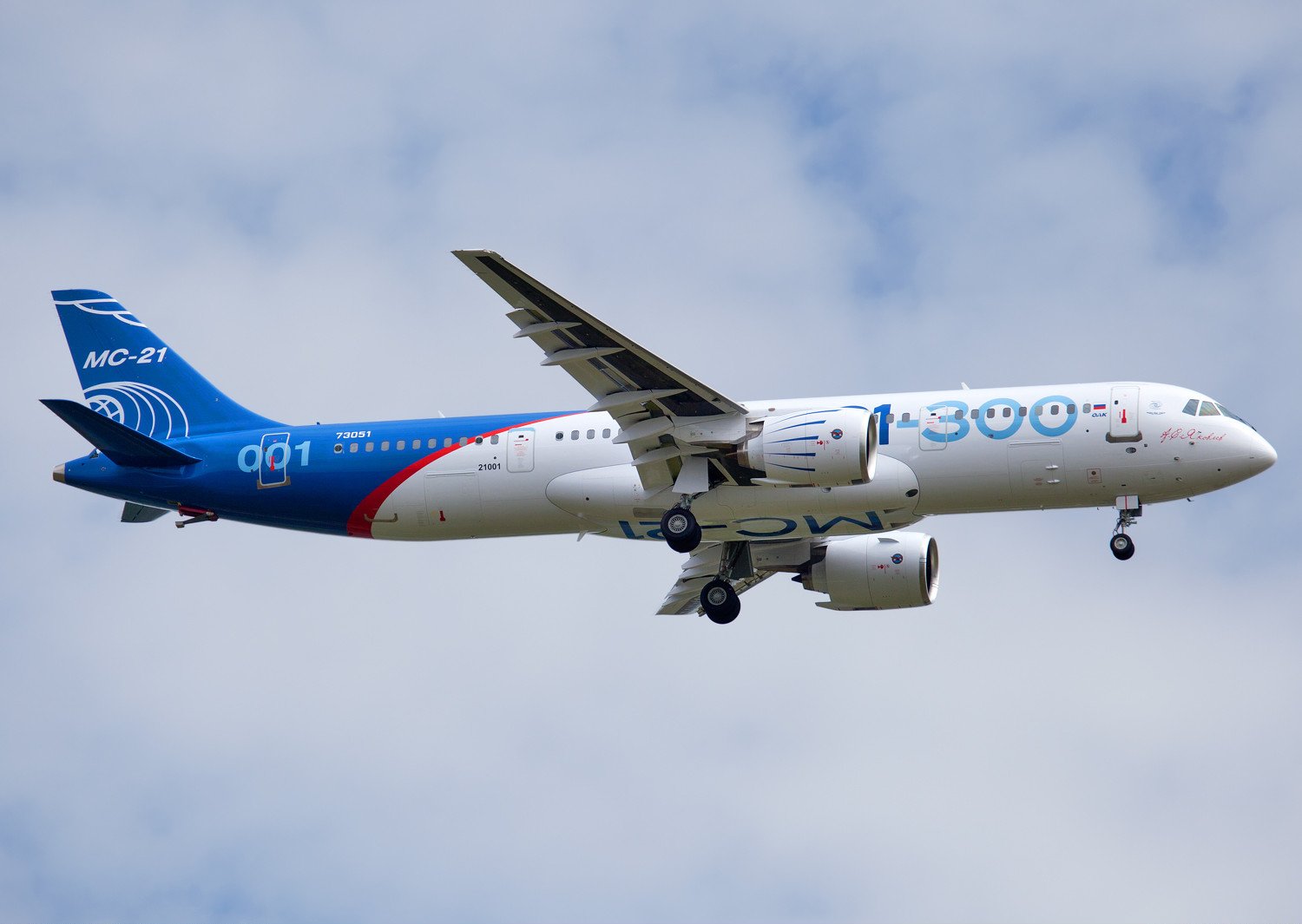
Dmitry Yadrov, Director of Rosaviatsia · AEX.RU, from Rosaviatsia, 8 October 2026 · translated from RussianAt Irkutsk, the contrast is similar. On 4 August, Rostec announced the first flight of an MC-21 built with series-production processes: one hour and twenty-three minutes in the air, with two PD-14 engines. This flight is a tangible industrial milestone, different from that of an experimental prototype. But Andrei Soynov, the plant's director, described a narrower horizon to IRCITY.RU on 1 October: only four series aircraft should be present at the test station by the end of 2026, at varying degrees of readiness. He specified that after ground and flight checks would still come the closing of the certification procedures and then the documents authorising transfer to customers.
The issue is therefore not whether Russia knows how to make these two families of aircraft fly. The MC-21 flies, and the Superjet has a commercial history that predates the substitutions undertaken since 2022. The question is to get a fully modernised configuration approved, reproducible from one aircraft to the next, and then to manufacture it regularly. The earlier certification of one variant does not amount to automatic approval of the new one. In an industry where a change of software, engine control or flight-control system brings its own compliance justifications, the last tests can remain the most decisive. The chronology of the coming certificates will say whether the airframes visible in the workshops can finally become delivered aircraft.
PD-8 certified, operation still to be proven
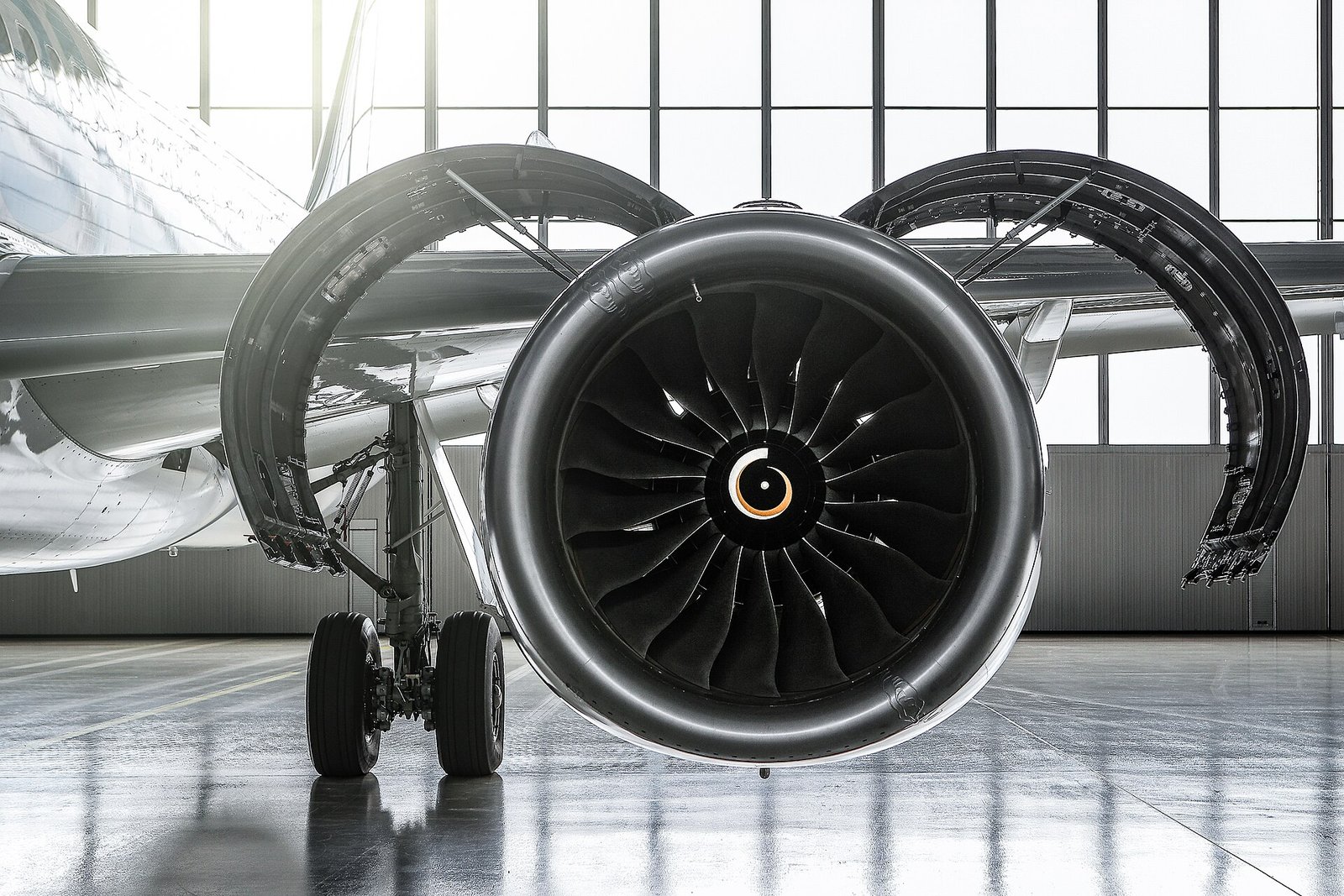
On 5 June 2026, at the St Petersburg International Economic Forum, the head of Rosaviatsia, Dmitry Yadrov, handed the type certificate for the PD-8 engine to the director general of ODK, Alexander Grachev. This is an identifiable date, published by the regulator itself, and not a mere presentation of an engine at a trade show. The PD-8 is to power the new SJ-100 and, in another application, the Be-200. According to Rostec material repeated by Rosaviatsia on 15 May, the test engines had accumulated more than 6,500 hours of testing, including icing, water ingestion and bird-strike tests and a simulated fan-blade-off. These sequences attest to considerable qualification work; on their own they say nothing about the reliability observed after thousands of commercial cycles.
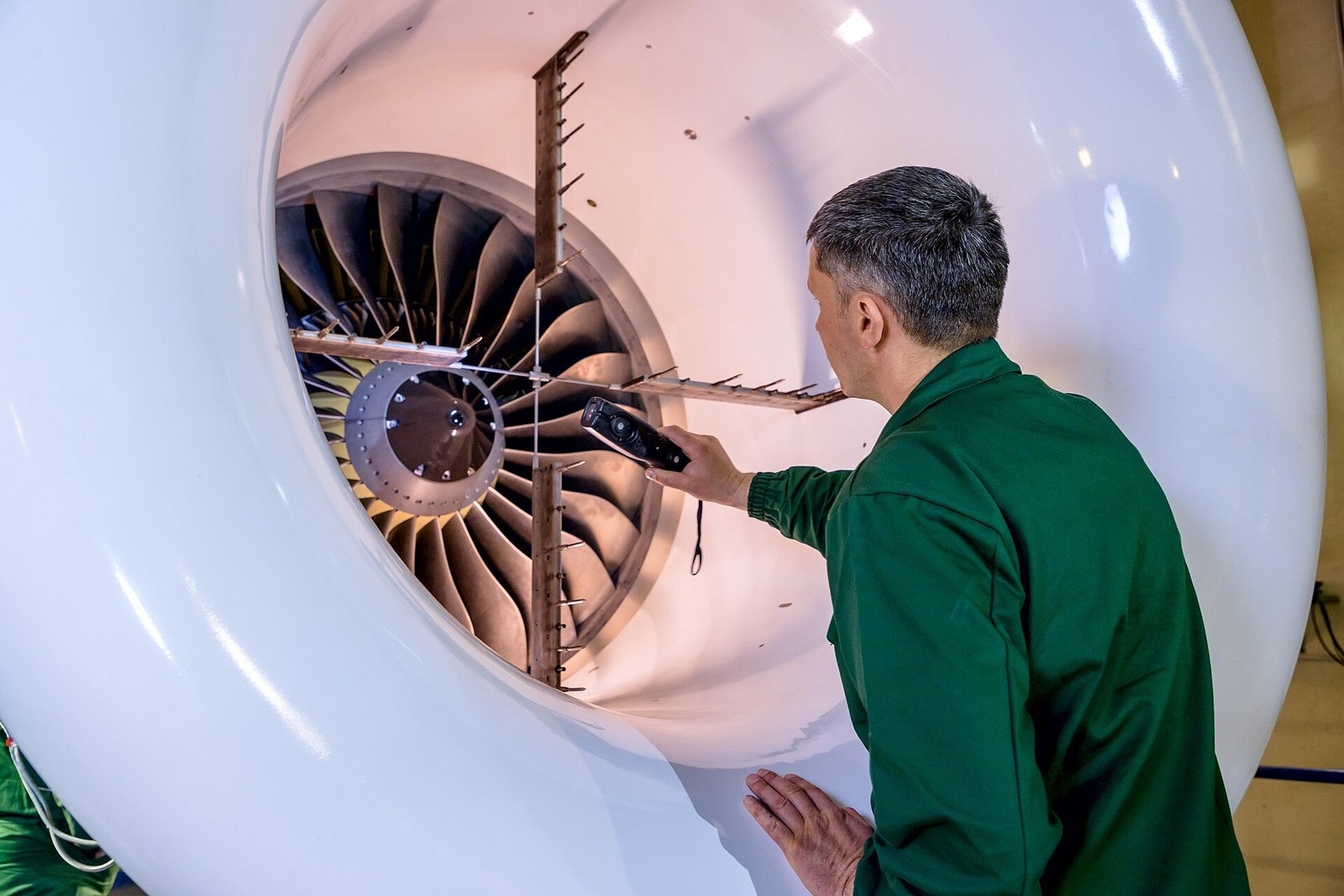
The engine is not isolated from its control systems. On 4 March, Rosaviatsia had approved the RED-8 and BZD-8 electronic components built by ODK-STAR in Perm. They take part in the regulation and protection of the propulsion system. On 25 June, Rostec announced the assembly of the first series engines; on 12 August, the group confirmed it had delivered the first two production PD-8s intended for the Superjets. These successive steps must be read separately: an approved sub-assembly, a certified engine, an engine rolled out of the factory and an operational aircraft are not four wordings of the same result. What remains to be observed is regular deliveries, the installation of the engines on new aircraft, and then their operation across a route network.
A warning came from the Russian Minister of Industry himself. On 6 July, Anton Alikhanov told state television, according to Interfax, that the PD-8 had been certified with a still low authorised service life. He expected this limit to be multiplied over the course of 2026, then to exceed three thousand hours by the end of 2027. The certificate was therefore not presented as the end of the development of operational maturity. An engine whose potential between overhauls remains restricted requires more removals, a larger spare-parts reserve and more demanding maintenance organisation. For a carrier, the cost is measured also in days out of service, in parts availability and in the reliability of repairs, not only in nominal thrust or in the success of regulatory tests.
"Today, capacity allows 36 aircraft a year to be produced, but there are bottlenecks that have to be widened."
Andrei Soynov, Director of the Irkutsk Aviation Plant · IRCITY.RU, picked up by 29.ru, 1 October 2026 · translated from RussianOn the MC-21, another track is advancing in parallel. Its PD-14 is the Russian propulsion choice and the substitution of the materials of the composite wing has been under way for several years. On 11 February 2026, Rosaviatsia approved the replacement of the last foreign composites in structural elements of the fin and the stabiliser. The authority stresses that this decision completes the programme of substitution of the composite materials concerned; it explicitly adds that the certification of the MC-21's other Russian equipment is continuing. Flight controls, computers, hydraulic systems, air conditioning and electrical equipment are all critical chains, where national mastery is established not by a list of suppliers but by the tests of each integrated configuration.
There remains the performance of the complete aircraft. On 23 June, the manufacturer OAK announced that the MC-21-310 had exceeded 3,800 kilometres with a load equivalent to 175 passengers and regulatory fuel reserves. Its chief designer, Vitaly Naryshkin, specified that the profile reproduced typical operation; test pilot Roman Taskaev indicated that the arrival reserve had been preserved. This demonstration provides one measured data point, without constituting a universal comparison with earlier versions promised over greater distances. The aircraft's mass, cabin layout, reserves and weather conditions all change the range. The independence of the engine and of the composites thus gains substance, but overall competitiveness will have to be judged per flight hour and per seat-kilometre.
Production rates run into costs
At Irkutsk, the question of production rate comes down to very concrete items: lathes, milling machines, numerically controlled machines and the employees who know how to operate them. On 1 October 2026, Andrei Soynov explained to IRCITY.RU that the plant planned 500 additional recruitments, of which about 170 had already been made. He did not describe an immediate general shortage, but the need to support the acceleration of a line that is still irregular. His intermediate target for 2027 is an aircraft moving from one station to the next every forty calendar days; by 2030, the announced ambition becomes a rhythm of ten days, corresponding to a theoretical production of 36 MC-21s a year. The displayed capacity of a workshop does not mean that the whole subcontracting chain will follow the same pace.
"The PD-8 engine obtained this certificate with a still reduced service life."
Anton Alikhanov, Russian Minister of Industry and Trade · Rossiya 24, cited by Interfax, 6 July 2026 · condensed translation from RussianOn 7 May, Sergei Chemezov, director general of Rostec, had presented to Vladimir Putin the annual target for 2030: 36 MC-21s, 20 SJ-100s and 12 Il-114-300s, according to Interfax. These end-of-period rates must not be confused with cumulative deliveries over the preceding years. The aviation development programme adopted in 2022 and then revised by government decision 1102-r of 4 May 2024 still provided, at the time, for 270 MC-21s and 142 Superjets over the whole period running to 2030. The targets have undergone several recompositions, analysed on 15 April 2026 by the independent outlet The Bell. Comparing an old cumulative quota with a recently announced annual rate without specifying the period would lead to a misleading conclusion.
Manufacturing is also a matter of cash. On 2 July 2026, government decision 1702-r raised the maximum envelope of the leasing programme for 63 aircraft to about 290.7 billion roubles, from 175.4 billion previously, according to Interfax and The Insider's review of the text published on 11 July. It covers 34 SJ-100s, 18 MC-21s and 11 Tu-214s; delivery windows have been moved from 2023–2025 to 2026–2029, while the lease term has gone from eighteen to twenty-two years. The increase of about 115.3 billion is a documented financial adjustment, not proof that all the machines would be paid for or delivered. The Insider also noted the postponement of certain industrial investments: the SJ-100 assembly line at Komsomolsk-on-Amur and several pieces of equipment at Ulyanovsk are scheduled later than originally planned.
The difference between manufacturing cost and sale price becomes central. On 23 September, Meduza, citing Kommersant, reported estimates of 8.9 to 11 billion roubles for the cost of an MC-21. For its part, the July leasing programme allocated about 5.338 billion roubles per aircraft of this type; this is a contracted delivery envelope, not necessarily a full production cost on the same basis. The comparison reveals a need for public compensation, but does not allow a certain unit loss to be calculated. According to Vedomosti on 28 September, industry officials aim to reduce the cost of the aircraft gradually to less than 7.5 billion roubles, in current prices, by 2032. This trajectory depends above all on stabilised volumes and suppliers.
A new funding avenue is under debate: Kommersant, picked up by Meduza on 23 September, describes discussions around a levy on tickets, earmarked for the leasing and operation of national aircraft. The amount and adoption remained undetermined. The mechanism would shift part of the burden of the transition onto passengers, where subsidies and the instruments of the National Wealth Fund already rest on public finances. It reveals a difficulty rarely visible in factory photographs: building an aircraft nationally may have strategic interest while demanding, during its first years in series, a financial effort greater than its sustainable commercial price.
Three readings of the same industrial race
The same aircraft changes meaning depending on the observer. For Rostec and Rosaviatsia, the first flight of the series MC-21, the certification of the PD-8 and the approval of the composites demonstrate that a national technological base has been rebuilt. For carriers, the first question is when the aircraft can be put into service with stabilised documentation, logistics and performance. Independent investigations, for their part, count the completed airframes, the delays and the funds committed. These accounts do not necessarily describe incompatible realities: a scientific advance can coexist with insufficient production, and a slipped industrial calendar does not cancel a certification actually obtained.
The official Russian discourse relies on verifiable results. The decisions of Rosaviatsia of 11 February, 4 March and 5 June 2026 precisely identify the systems and the certificates concerned. On 8 October, the regulator also published its incomplete test figures instead of announcing a general certification as achieved. Vadim Badekha, head of OAK, set out on 11 February, in an official statement, the strategic interest of the national composites sector. This reading emphasises the capacity to design and certify solutions without the authorisation of Western suppliers. Its limit: it says less directly about the cost of in-service support, spare-parts stocks and the production actually accepted by the airlines.
Independent Russian newsrooms shift the focus to cumulative results. On 15 April 2026, The Bell put at thirteen the new civil aircraft produced in Russia between 2022 and 2025: twelve Superjets and one Tu-214 for special use, according to its own counting method. This tally measures neither the prototypes in flight nor the unfinished airframes, and should therefore not be mechanically set against the 2026 assembly figures. On 11 July, The Insider traced the new credits and the postponements of industrial items entered in government decisions. These data do not rest solely on anonymous testimony: they can be checked against contracts, public timetables and funding texts.
On the Western side, Reuters described as early as 8 August 2025 a slowed civil production and the obstacles caused by the loss of suppliers and financing costs. Yet the investigation by Finnish public broadcaster Yle, on 26 June 2025, introduced an important nuance: it counted, in customs data running to September 2024, nearly one billion euros of Airbus and Boeing parts that had arrived in Russia via third countries. Airbus and Boeing replied that they complied with the applicable restrictions. This investigation does not demonstrate Russian sovereignty; rather, it establishes the persistence of indirect supply channels for maintaining the existing fleets. Sanctions have thus changed the cost, risk and traceability of imports without producing an absolute material closure.
The Indian viewpoint opens another perspective, distinct from the opposition between Moscow and Western capitals. In October 2025, Hindustan Aeronautics Limited and OAK signed a memorandum of understanding on manufacturing the SJ-100 in India, Hindustan Times reported on 28 October. In January 2026, Business Standard spelled out the Indian intentions: first acquire aircraft to familiarise operators, then consider local production over several years. These agreements are cooperation projects, not series exports already delivered. Earlier analyses by the Higher School of Economics stressed, as early as 2023, the critical dependence of new programmes on imported components and tools; their age rules out automatically deducing the exact situation in October 2026. Between a claimed national capacity, a documented financial fragility and the possibilities of Asian cooperation, one common test remains: validation by the airlines in real operation.
The real test begins in scheduled service
In Aeroflot's offices, the calendar is no longer measured only in programme years but in rotations to be prepared. On 7 September 2026, its director general Sergei Alexandrovsky announced the first MC-21 receptions in the fourth quarter of 2027, with eight aircraft, then ten more in 2028, according to Vedomosti and Interfax. On 18 September, an additional contract for 90 MC-21s was signed with Rostec's structures, for deliveries announced between 2029 and 2032. This order gives an industrial outlook several years ahead; it does not instantly enlarge the fleet. Alexandrovsky plans the training of pilots, cabin crew and engineers from 2027, before the first aircraft arrive.
For the early days of the type, the carrier has chosen routes where a replacement aircraft and technical assistance are easier to organise: Moscow to St Petersburg or Nizhny Novgorod are among the routes cited by Interfax in September. This strategy is instructive. If a new aircraft is indeed certified, introducing it into regular operation nonetheless requires stocks, authorised technicians, robust planning and a learning curve. The first short routes will make it possible to observe recurring failures, repair times and real consumption without immobilising an aircraft for too long far from its maintenance base. The ability to open longer routes afterwards will be a more convincing indicator than the first flight alone.
The urgency is fuelled by the outlook for the existing fleet. On 7 October 2025, Dmitry Yadrov estimated before the Federation Council that a pessimistic scenario could lead to the withdrawal of 339 aircraft by 2030: 230 aircraft of Russian design, often old, and 109 foreign aircraft, according to TASS. These are neither 339 aircraft already grounded nor a certain forecast. At the same time, the regulator counted 1,135 aircraft among the 76 airlines carrying almost all traffic, of which 1,088 were in operation. Renewal therefore concerns old turboprops and regional aircraft as much as the Airbus and Boeing aircraft deprived of their usual support chain. The SJ-100 and MC-21 do not meet all geographical needs: the Il-114-300 and other types remain necessary.
Demand leaves little room for a prolonged halt in capacity. According to Rosaviatsia, cited by TASS on 2 October 2026, Russian carriers carried 70.55 million passengers from January to August, of which 52.33 million on domestic flights. The average seat load factor reached 90.1%. This volume shows the importance of air transport over Russia's long distances, without by itself guaranteeing future growth or proving a generalised shortage. Russian officials meanwhile raise the possibility of re-engining older Superjets fitted with the Franco-Russian SaM146. This file complicates the calculation: installing a national engine on an airframe already in service requires a technical programme, authorisations and financing distinct from the acquisition of a new SJ-100.
One last lock remains outside the assembly lines: lasting competitiveness. The public figures do not yet provide independent series on cost per seat-kilometre, punctuality, hours between engine removals, daily availability or parts stocks for the fully substituted versions. In the course of 2027, the certification decisions and the first deliveries should turn part of the promises into concrete measurements. The factories will then be able to show not only that they produce, but that they deliver at the planned frequency; the carriers will have to show that the aircraft fly enough to pay for their operation. At Irkutsk as at Komsomolsk-on-Amur, the question will become more precise: how many fully certified aircraft, maintained at a sustainable cost and actually used by passengers, will have entered service by the end of 2027?
Timeline
25 December 2025 — Rostec announces it is aiming for twelve SJ-100 deliveries in 2026, an objective later pushed back. (Source: Interfax, 25 December 2025)
11 February 2026 — Rosaviatsia approves the substitution of the composites in the fin and stabiliser of the MC-21. (Source: Rosaviatsia, 11 February 2026)
4 March 2026 — The RED-8 and BZD-8 electronic devices of the PD-8 control system are approved. (Source: Rosaviatsia, 4 March 2026)
7 May 2026 — Rostec announces the 2030 annual target rates of 36 MC-21s, 20 SJ-100s and 12 Il-114-300s. (Source: Interfax, 7 May 2026)
5 June 2026 — Rosaviatsia hands over the type certificate of the PD-8, as well as that of the Il-114-300. (Source: Rosaviatsia, 5 June 2026)
23 June 2026 — OAK announces a demonstration of more than 3,800 km for the MC-21 with a load equivalent to 175 passengers. (Source: OAK, 23 June 2026)
2 July 2026 — Decision 1702-r revises the funding and the timetable of the public leasing of 63 aircraft. (Source: Russian government; Interfax, 11 July 2026)
4 August 2026 — Rostec announces the first flight of an MC-21 built to series-production processes. (Source: Rostec, 4 August 2026)
12 August 2026 — ODK delivers the first two series PD-8 engines intended for the SJ-100. (Source: Rostec, 12 August 2026)
18 September 2026 — Aeroflot and Rostec sign an additional contract for 90 MC-21s intended for 2029–2032. (Source: Vedomosti, 18 September 2026)
1 October 2026 — The Irkutsk plant describes the preparation of four series MC-21s for its test station by the end of 2026. (Source: IRCITY.RU / 29.ru, 1 October 2026)
8 October 2026 — Rosaviatsia publishes the latest test counts for the SJ-100 and the MC-21. (Source: AEX.RU, 8 October 2026)
Sources
- Rosaviatsia — PD-8 and Il-114-300, 5 June 2026 — special.favt.gov.ru
- Rosaviatsia — MC-21 composites, 11 February 2026 — special.favt.gov.ru
- Rosaviatsia — PD-8 electronics, 4 March 2026 — special.favt.gov.ru
- AEX.RU — certification status, 8 October 2026 — aex.ru
- OAK — MC-21 range demonstration, 23 June 2026 — uacrussia.ru
- Rostec — two series-production PD-8 engines, 12 August 2026 — rostec.ru
- Rostec — first series-built MC-21, 4 August 2026 — rostec.ru
- Interfax — PD-8 service life, 6 July 2026 — interfax.ru
- Interfax — 2030 production rates, 7 May 2026 — interfax.ru
- Interfax — changes in funding, 11 July 2026 — interfax.ru
- The Insider — review of leasing deadlines, 11 July 2026 — theins.ru
- The Bell — industrial record 2022–2025, 15 April 2026 — thebell.io
- Meduza — cost and proposed levy, 23 September 2026 — meduza.io
- Vedomosti — Aeroflot timetable, 7 September 2026 — vedomosti.ru
- Vedomosti — contract for 90 MC-21s, 18 September 2026 — vedomosti.ru
- IRCITY.RU / 29.ru — interview with Andrei Soynov, 1 October 2026 — 29.ru
- Aviation21 — 27 SJ-100s in assembly, 3 August 2026 — aviation21.ru
- TASS — passenger traffic, 2 October 2026 — tass.ru
- TASS — aircraft retirement scenario, 7 October 2025 — tass.ru
- Reuters — industrial difficulties, 8 August 2025 — reuters.com
- Yle — customs investigation into parts, 26 June 2025 — yle.fi
- Hindustan Times — HAL–OAK partnership, 28 October 2025 — hindustantimes.com
- Business Standard — India's SJ-100 strategy, 28 January 2026 — business-standard.com
- Aviatorshina — specialist public channel, consulted 22 October 2026 — t.me
- Rosaviatsia — PD-8 tests exceeding 6,500 hours, 15 May 2026 — special.favt.gov.ru
- Interfax — certification targets announced on 20 March 2026 — m.interfax.ru
- TASS, via Rambler — updated certification deadlines, 10 September 2026 — news.rambler.ru
- Government of Russia — decision 1102-r of 4 May 2024 — consultant.ru
- Interfax — 232 MC-21 certification flights announced in June 2026 — interfax.ru