Russia in Asia: Anchor Power, New Dependencies
From the Chinese border to the ASEAN summits, agreements and trade flows reveal very different balances of power. Asia accounts for three quarters of Russian trade, but this reorientation does not mean Moscow sets the terms everywhere: contracts, investment and votes show where Russia really carries weight.
India. A major customer ($59.86bn of trade, of which $44.38bn of imported hydrocarbons) that is diversifying its arms suppliers: 40% of Indian major-arms imports in 2021-2025, down from 51% five years earlier.
Central Asia. More trade in value ($47bn), but a Russian share of the region’s foreign trade that fell from 23% to 19% between 2021 and 2025.
ASEAN. A diplomatic success in Kazan, but between $17.8bn and $22bn of trade against $228bn with China, and $65m of Russian investment in 2024.
The trucks cross, Beijing sets the terms
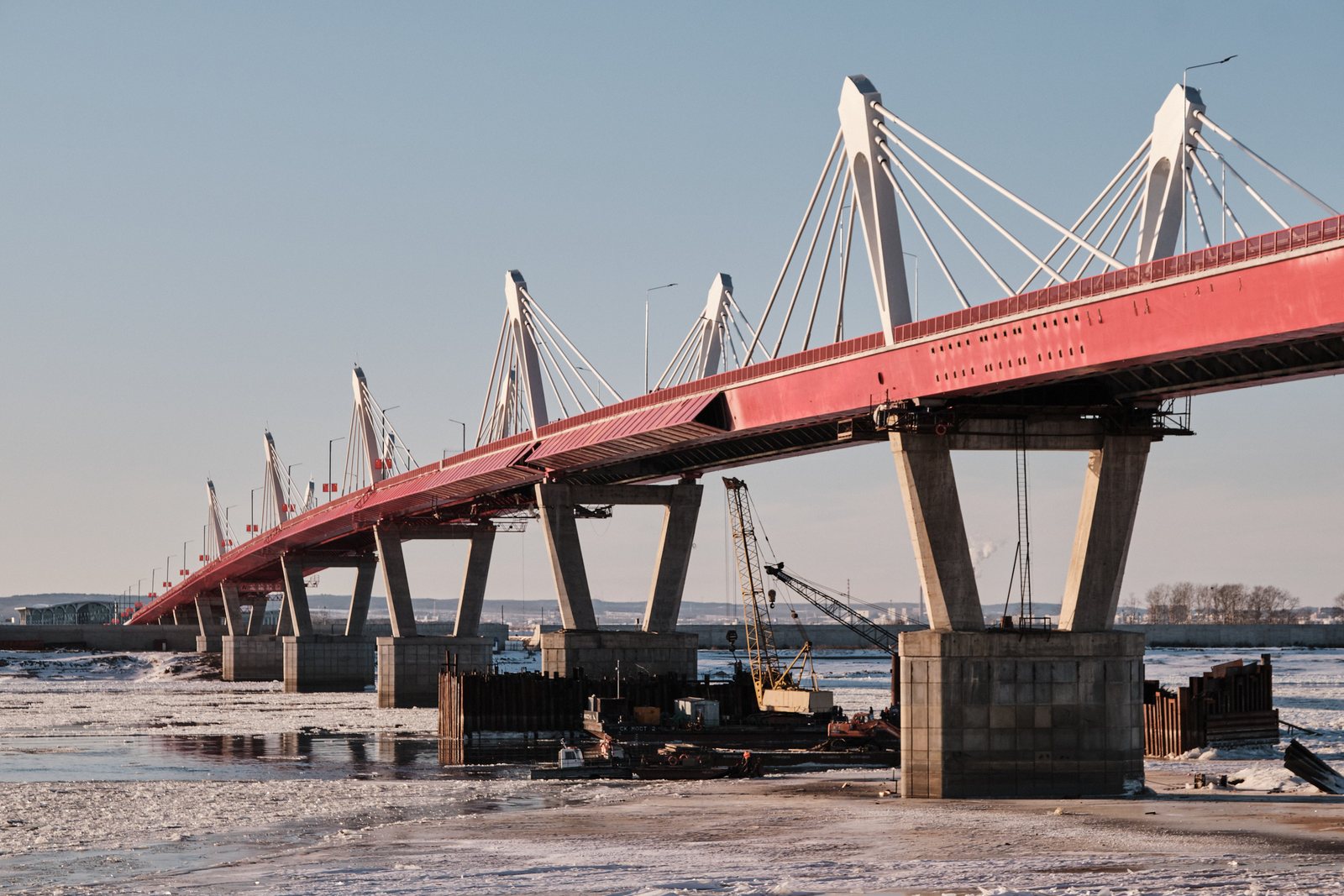
On 10 June 2022, trucks drove for the first time across the road bridge over the Amur between Blagoveshchensk in Russia and Heihe in China. The structure opened to traffic two years late because of the pandemic, Interfax reported on the day of the inauguration. This infrastructure embodies a long-standing reality that the Ukraine conflict has accelerated: Russia is not discovering Asia, but it is redirecting a growing share of its trade there. Chinese Vice Premier Hu Chunhua, addressing the ceremony by video the same day, called for easier customs formalities and freer movement of goods. Behind the talk of connectivity, carriers still need roads, crossing slots and solvent customers. A bridge makes trade possible; it does not determine the balance of power. [2][3]
“I am convinced that this bridge will become a hallmark of the cities of Blagoveshchensk and Heihe.”
Vasily Orlov, Governor of the Amur Region · Interfax, inauguration of the Blagoveshchensk–Heihe bridge · 10 June 2022According to the Russian Federal Customs Service, in its January–August 2026 review published on its official channel in October, Asia accounts for 75.5% of Russia’s foreign trade in goods. Of the $505.5 billion of total trade declared over those eight months, close to three quarters is therefore directed at the continent. Customs also report an 18.1% increase in trade with Asia compared with the same period of 2025. They specify that mineral products make up 56.1% of Russian exports, while machinery and equipment account for 48.5% of imports. The first percentage, however, says nothing about Moscow’s weight in the trade of each Asian economy. Being heavily dependent on one’s customers does not mean they are, in turn, heavily dependent on their supplier. [1]
China illustrates this possible imbalance. According to Chinese customs statistics reported by Reuters on 14 January 2026, bilateral trade came to about $228.1 billion in 2025, down 6.9% in dollar terms from 2024. Chinese exports to Russia fell faster than Chinese imports from Russia. The movement may reflect, among other things, energy prices and Russian demand for Chinese vehicles; on its own it does not signal a strategic break. The trend then reversed in 2026: the Far East and Arctic Development Corporation, cited by TASS on 12 August, reported growth of about 25% in the first half, to some $135 billion, while First Deputy Prime Minister Denis Manturov spoke in early September of a 22% rise to more than $135 billion. A relationship can thus be central to both governments while going through commercial cycles that sometimes run counter to political statements. [4][5][6]
Investment casts a different light. The Eurasian Development Bank estimated in its report published in 2025 that the stock of Chinese direct investment in Russia stood at $17.4 billion in the first half of that year, against $7.3 billion in 2016. Extractive activities made up 50.5% of that portfolio, manufacturing 39%. Among the projects cited is the Amur gas chemical complex, in which Sinopec holds 40%. This industrial footprint rules out reducing the partnership to a simple swap of oil for cars. But a financial stock measures neither the technology transferred, nor local value added, nor the financing of each extension. In its dashboard updated on 29 October 2026, the German institute MERICS also stresses the decisive role of hydrocarbons and dual-use goods, relying on statistical categories that should be kept distinct from military conclusions. [7][8]
Gas puts this interdependence in a harsher light. According to MERICS, Gazprom delivered 38.8 billion cubic metres through Power of Siberia 1 in 2025. The additional Power of Siberia 2 project, renamed Power of Baikal according to a ministerial statement reported by Reuters on 2 September 2026, provides for up to 50 billion cubic metres a year; neither a final commercial price nor a firm start-up date was made public in that dispatch. The supplier wants a new pipeline; the buyer can negotiate its terms. Moscow has reserves, industrial capacity and a common border; Beijing has access to an immense market and competing sources of supply. Russia is far from external to the Chinese economy. What remains to be seen is how many major commercial decisions it can take without first seeking Beijing’s agreement. [8][9]
New Delhi buys, but chooses its allies
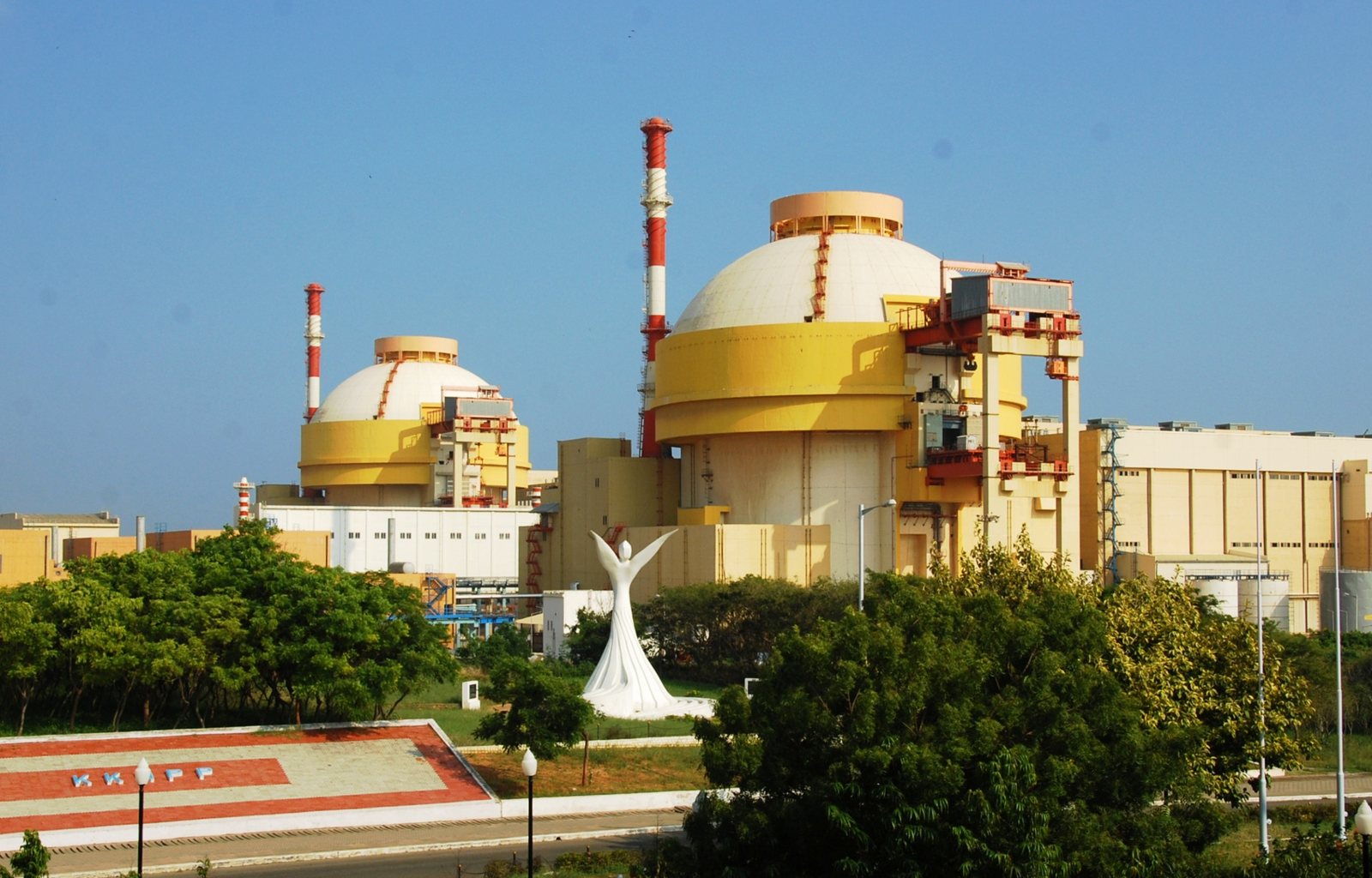
In June 2026, at the Kudankulam nuclear site in India’s Tamil Nadu state, units 3 and 4, built with Russian technical cooperation, reached 82.65% physical completion. That figure appears in an official reply from India’s Department of Atomic Energy published on 29 July 2026; commissioning was then expected in June 2027 and June 2028. Units 5 and 6 are only 45% complete, according to the same document. The engineers, equipment orders and work already carried out are a reminder that international cooperation is not reduced to leaders’ meetings or a communiqué. India remains a long-term partner for Russian industry, even as New Delhi multiplies its own suppliers. [12]
Trade flows, however, have been built around one dominant product. India’s Ministry of Commerce, whose statistics are reproduced by the India Brand Equity Foundation and available on its portal, puts goods trade with Russia at $59.86 billion in the 2025-26 Indian fiscal year. India imported $55.36 billion of Russian products but exported only $4.49 billion to that market. Crude oil and petroleum products account for $44.38 billion of its imports from Russia. The Indian embassy recalled in 2026 that bilateral trade had reached $68.7 billion the previous fiscal year. The mass purchase of hydrocarbons is therefore an economic reality; it does not prove that India has given up its room for diplomatic manoeuvre or its other energy outlets. [10][11]
This autonomy shows in joint statements as well as in industrial purchases. At the Moscow summit of 8 and 9 July 2024, Narendra Modi and Vladimir Putin reaffirmed their special and privileged strategic partnership and adopted, according to the Indian presidency, economic development goals out to 2030. The joint statement of 5 December 2025 renews that orientation. These are real diplomatic commitments, not a treaty requiring India to adopt Russian positions on every international issue. Indian governments meanwhile maintain relations with the United States, France, Japan and other partners. The question is not whether New Delhi is for or against Moscow, but which concrete interests each cooperation serves and in which areas substitution is conceivable. [13][14]
The defence sector confirms the scale of the link and its transformation. In its note of 9 March 2026, SIPRI says Russia accounted for 40% of Indian major-arms imports in 2021-2025, against 51% in 2016-2020. Russia thus remains a significant supplier but is losing relative share among the purchases of a historic customer. Across the global market, the volume of Russian major-arms exports fell by 64% between the two periods, and its global share dropped from 21% to 6.8%. The same institute notes that 76% of Russian exports in 2021-2025 went to Asia and Oceania. Its measures cover conventional volumes of major weapons, not contract values, ammunition or maintenance of equipment already delivered. Russian equipment that stays in a foreign army for a long time remains a technical relationship, even when new orders diversify. [15]
In Pyongyang, the relationship crosses another threshold. On 19 June 2024, Vladimir Putin and Kim Jong Un signed a strategic partnership treaty including conditional mutual assistance in the event of armed attack, according to the text released by KCNA and described by Yonhap the next day. On 27 April 2025, the North Korean authorities acknowledged the deployment of their soldiers alongside Russian forces in the Kursk region, Reuters reported. That fact sets operational military cooperation apart from mere equipment sales. Without further evidence, it does not make it possible to establish the quantities of missiles transferred or any technological quid pro quo. Two Asian models thus coexist: an India that negotiates without exclusivity and a North Korea bound to Moscow by extensive security obligations. [16][17]
In Central Asia, influence changes shape
On 28 October 2026, Uzbekistan’s National Statistics Committee published results for the first nine months of the year. In the tables of trading partners, China accounts for 23.2% of the country’s trade, Russia for 16%. That snapshot is more precise than a general claim that Central Asia has become Chinese or remains Russian. The percentages add imports and exports; they do not detail the dependencies specific to each sector. An Uzbek manufacturer buying a Chinese machine may sell its products on the Russian market; a worker earning an income in Russia does not conclude that Tashkent must align with Moscow. The authorities of these states are also looking for their own leverage in relations between great powers. [18]
The Russian International Affairs Council presented on 14 October 2026, and discussed again on 22 October, its report on the so-called 5+1 cooperation formats in Central Asia. At the first presentation, the institute reported that Russian trade with the countries of the region, excluding Turkmenistan, reached $47 billion in 2025. But its share of the combined foreign trade of the countries concerned is said to have fallen from 23% to 19% between 2021 and 2025. The finding, relayed in a debate attended by Alexei Maslov, director of the Institute of Asian and African Studies at Moscow State University, deserves to stand in full: more trade in value does not mean more relative influence. The report also points to the proliferation of formats pairing the five states of the region with Russia, China, India, the United States, the European Union, Japan and South Korea. [19][21]
Moscow nonetheless has instruments that the customs table alone does not describe. The Eurasian Economic Union organises common rules for Russia, Kazakhstan and Kyrgyzstan, among other members; the Collective Security Treaty Organization maintains a security cooperation framework with several post-Soviet states. Rail networks inherited from the Soviet period, the use of Russian in business and universities, and labour migration all contribute to the density of ties. A study published in February 2026 in Central Asian Survey notes that Russia remains important in higher education in Kazakhstan and Kyrgyzstan, even as those countries diversify their educational partnerships. It would be excessive to equate these social and institutional relations with an automatic say over national decisions. Their reach varies by capital and by sector. [20]
Investment provides a different indicator. In its report of 25 October 2026, UNCTAD estimates foreign direct investment flows into the Eurasian Economic Union at $27.2 billion in 2025, against $4.5 billion in 2024, with about 93% going to Russia. The organisation specifies, however, that the value of new announced projects in Russia fell by 83% to $250 million. It considers it possible that the rise in flows results in part from reinvested earnings or financial restructurings. This distinction between transfers of funds and the construction of factories matters across Eurasia. For a Kazakh entrepreneur, what counts is also being able to reach several markets without being captive to a single logistics route. [22]
That is why infrastructure is becoming a tangible arena of competition. Russia’s Ministry of Transport indicated in September 2026 that the capacity of the BAM and Trans-Siberian railways was 180 million tonnes, with a target of 210 million by the end of 2030. This is announced capacity, not freight actually moved. For its part, the European Commission wrote on 6 February 2026 that traffic on the Trans-Caspian corridor, linking Central Asia to Europe via the Caucasus without crossing Russia, had quadrupled since 2022. The US-based CSIS examined on 16 April the obstacles to the North–South corridor envisaged by Moscow, Tehran and New Delhi. These routes do not mechanically replace one another: their costs, volumes and destinations differ. But their promoters all seek to turn kilometres of track into commercial freedom for their partners. That is where a still-open part of Russian influence in Central Asia will be decided. [23][24][25]
In Kazan, the signatures meet reality
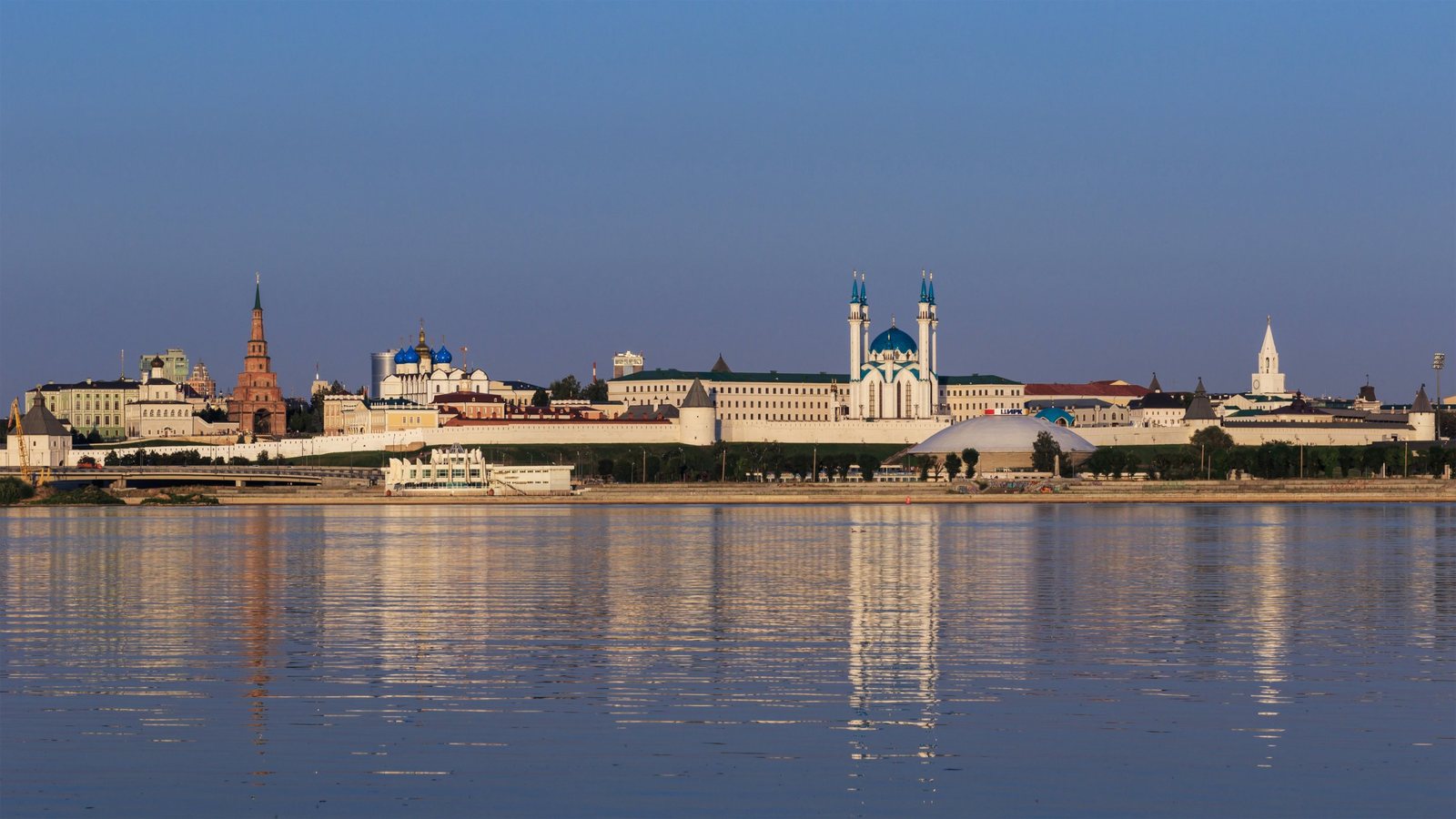
On 18 June 2026, ASEAN delegations met in Kazan around President Vladimir Putin and Philippine President Ferdinand Marcos Jr., whose country holds the organisation’s chair. The ASEAN Secretariat confirmed the adoption of a joint declaration, texts on energy and culture, and an action plan for 2026-2030. For Moscow, the summit demonstrates an ability to engage with countries that cultivate close economic relations with several major powers. TASS presents the document as a means of developing practical cooperation, from transport to digital. On 18 June, Putin also called, according to TASS, for greater use of national currencies in trade. None of this in itself amounts to a military alliance or a guarantee that investment will materialise. [26][27][33]
“It is important to make a transition to national currencies in financial settlements in commercial transactions.”
Vladimir Putin, President of the Russian Federation · TASS, Russia–ASEAN summit · 18 June 2026Verification starts with ASEAN’s own accounts. On 22 September 2026, at the consultation of economic ministers in Manila, its secretariat put goods trade with Russia in 2025 at $17.8 billion on a preliminary basis. Alexander Gabuev, director of the Carnegie Russia Eurasia Center, wrote on 25 June that this trade came to about $22 billion, against $228 billion with China. The gap of nearly a quarter from the ASEAN series cannot be erased without identifying scope and method. The two sources nonetheless agree on the order of magnitude: despite the summit meetings, the economic relationship between Russia and Southeast Asia remains far smaller than Sino-Russian trade. Visible diplomacy does not necessarily create a network of subcontractors, loans and orders of the same size. [28][31]
“ASEAN will not become a counterweight to Russia’s dependence on China.”
Alexander Gabuev, Director of the Carnegie Russia Eurasia Center · Carnegie Politika · 25 June 2026The contrast is even sharper for capital. ASEAN’s official overview of June 2025 puts direct investment flows from Russia to member countries at $65.17 million for 2024, against $196.96 million in 2023, a fall of 66.9%. The ASEAN Investment Report 2025 states that the region as a whole received $226 billion of FDI in 2024. The Russian contribution thus represents roughly 0.03% of that annual total, an order-of-magnitude calculation that should not be confused with a cumulative stock. In the same period, the secretariat also recorded 2.48 million Russian visitors in member states in 2024, proof that the human and tourist relationship is not the same thing as industrial financing. [29][30]
Readings of this sequence diverge without necessarily cancelling each other out. Official Moscow stresses the multiplication of political mechanisms and areas of cooperation. Alexander Gabuev’s Western analysis, published by Carnegie in June 2026, acknowledges the diplomatic success of the Kazan meeting but considers its practical results modest, with no announcement of new commercial contracts. On the Russian academic side, Elena Pyltsina and Georgy Toloraya explain, in a 2026 study published by IMEMO, that the partnership allows several ASEAN states to diversify their relations, while making its progress conditional on concrete achievements. These assessments offer more than labels of camps: they establish that an Asian country may wish to deepen relations with Moscow precisely so as not to depend exclusively on one other power. [33][31][32]
The distinction between goals and results also applies to Chinese positions. Following Donald Trump’s signing of a US law tightening sanctions on Russia, China’s Ministry of Commerce stated on 19 September 2026, according to TASS and Global Times, that it opposes unilateral sanctions lacking UN authorisation as well as secondary sanctions targeting other countries over their dealings with third parties, and that it reserves the right to take the necessary measures to protect its companies. This reaction defends Beijing’s interests; it does not establish that every Chinese bank accepts the same risks. Between the Kazan announcements, the ASEAN data and the caution of analysts, one fact stands: Russia remains a sought-after interlocutor, but the Southeast Asian states keep their own priorities. The visit to Moscow of the ASEAN Secretary-General, Kao Kim Hourn, from 13 to 15 October 2026 now opens the hardest test: following the projects after the signatures. [34][35][36]
At the UN, interests separate the partners
In New York on 24 February 2025, state representatives voted in the United Nations General Assembly on a resolution on peace in Ukraine. Text A/RES/ES-11/7 was adopted by 93 votes in favour, 18 against and 65 abstentions, according to the official record. Almost three years earlier, on 2 March 2022, another resolution had received 141 votes in favour, 5 against and 35 abstentions. The two ballots did not have exactly the same content or the same diplomatic setting; comparing them is therefore not enough to measure support for Moscow. It does show that the number of Russia’s trading partners cannot be converted into an equivalent number of political allies. In February 2025, China and India abstained while North Korea voted against: an abstention is not support. [37][38]
Independence is also measured in how goods are paid for. In its 2025 review published in 2026, the Bank of Russia says that about 85% of external settlements were made in roubles or in partner-country currencies. It details that 53.7% of export revenue and 54.4% of import payments were settled in roubles; partner-country currencies make up most of the balance outside Western currencies. The effort to transform trade channels is therefore observable. The same document says alternative solutions continue to be studied with bilateral partners and within the BRICS and SCO forums. It does not confirm the existence of a multilateral BRICS infrastructure already settling all of its members’ trade without difficulty. The invoicing currency does not solve exchange and convertibility problems. [39]
BRICS and the Shanghai Cooperation Organisation offer spaces for negotiation. But taking part in those frameworks does not create diplomatic discipline comparable to a formal alliance. On some files, Beijing defends trade with Moscow while shielding its own financial institutions from US restrictive measures: on 19 September 2026, its Ministry of Commerce rejected the principle of secondary sanctions and invoked the rights of Chinese companies. That reaction defends Beijing’s interests, not all Russian positions. New Delhi also protects its purchases and its nuclear cooperation without delegating its foreign policy. To assess Russian influence, one must look at verifiable decisions: a vote, a contract, financing, a delivery or a security agreement actually applied. [34][35]
Industrial deadlines provide less ambiguous tests than diplomatic formulas. In India, reactors 3 and 4 at Kudankulam are due, according to the official status published in July 2026, to enter service in 2027 and then 2028. The Amur gas chemical complex is expected in 2027, according to the Eurasian Development Bank (2025). In the East, Russia’s Ministry of Transport aims for a capacity of 210 million tonnes on the BAM and Trans-Siberian axes by 2030. The ASEAN 2026-2030 plan calls for funded projects and usable payments. As for Power of Siberia 2, the price and financing parameters made public remain insufficient to equate a political decision with gas already delivered. Their delivery will measure Moscow’s influence. [12][7][23][27][9]
| Project | Announced deadline | To check |
|---|---|---|
| Kudankulam 3 and 4 (India) | Commissioning expected June 2027 and June 2028; 82.65% complete in June 2026 | Schedule kept; units 5 and 6 at 45% |
| Amur gas chemical complex | Expected in 2027 | Ramp-up and local value added |
| BAM and Trans-Siberian | 210 Mt capacity by end-2030 (180 Mt today) | Freight actually moved, not announced capacity |
| Russia–ASEAN action plan | Period 2026-2030 | Funded projects, usable payments |
| Power of Siberia 2 (Power of Baikal) | Up to 50 bcm a year; no firm public timetable | Commercial price, financing, investment decision |
This distinction applies equally to residents of the Russian Far East. At the Blagoveshchensk–Heihe crossing, opened in June 2022, trucks use real infrastructure; its schedules, tariffs, delays and freight volumes can be checked. In neighbouring countries, business owners, students and workers will make their choices according to the jobs, training and markets within reach, not by the speeches given in Moscow, Beijing or Kazan alone. Russia is not on the periphery of Asia in energy, certain technologies, defence or land corridors. Nor does it hold a uniform position of command there. Its influence is strong where its partners need its resources or capabilities; it becomes negotiated where they have alternatives. At the next border crossing, a truck’s load will show what is moving. Its price and the terms of the contract will say more: who really chose the terms of the exchange? [2]
Timeline
10 June 2022 — The Blagoveshchensk–Heihe road bridge opens to traffic.
13 July 2023 — ASEAN and Russian foreign ministers adopt a declaration on their strategic partnership in Jakarta.
19 June 2024 — Russia and North Korea sign their strategic partnership treaty in Pyongyang.
8–9 July 2024 — The Modi–Putin summit in Moscow sets economic orientations out to 2030.
24 February 2025 — UN vote on resolution ES-11/7: 93 in favour, 18 against, 65 abstentions.
27 April 2025 — Pyongyang confirms the participation of North Korean troops in operations in the Kursk region.
5 December 2025 — India and Russia issue a joint statement renewing their strategic partnership.
14 January 2026 — Chinese customs report a decline in Sino-Russian trade in 2025.
18 June 2026 — The Russia–ASEAN summit in Kazan adopts its action plan for 2026-2030.
22 September 2026 — ASEAN publishes its preliminary assessment of 2025 trade with Russia, at $17.8 billion.
25 October 2026 — UNCTAD publishes its report on investment in the Eurasian Economic Union.
Sources
- 01 Russian Federal Customs Service — January–August 2026 results (official Telegram channel), October 2026 — t.me/customs_rf
- 02 Interfax — opening of the Amur bridge, 10 June 2022 — interfax.com
- 03 State Council of China — opening of the bridge, 10 June 2022 — english.www.gov.cn
- 04 Reuters — China–Russia trade in 2025, 14 January 2026 — reuters.com
- 05 TASS — Russia–China trade in the first half of 2026, 12 August 2026 — tass.com
- 06 TASS — Denis Manturov on trade with China, 3 September 2026 — tass.com
- 07 Eurasian Development Bank — China–Eurasia report 2025 — eabr.org
- 08 MERICS — China–Russia dashboard, updated 29 October 2026 — merics.org
- 09 Reuters — Power of Siberia 2 renamed Power of Baikal, 2 September 2026 — reuters.com
- 10 Indian Department of Commerce — official statistics portal — trade-analytics.commerce.gov.in
- 11 IBEF — India–Russia trade, fiscal year 2025-26 — ibef.org
- 12 Government of India — parliamentary reply on Kudankulam, 29 July 2026 — pib.gov.in
- 13 Government of India — joint statement of the Moscow summit, July 2024 — pmindia.gov.in
- 14 Indian Ministry of External Affairs — joint statement of 5 December 2025 — mea.gov.in
- 15 SIPRI — arms transfers 2021–2025, 9 March 2026 — sipri.org
- 16 Yonhap — Russia–North Korea treaty, 20 June 2024 — en.yna.co.kr
- 17 Reuters — North Korean deployment, 27 April 2025 — reuters.com
- 18 National Statistics Committee of Uzbekistan — foreign trade, 28 October 2026 — stat.uz
- 19 RIAC — presentation of the “5+1 format” report, 14 October 2026 — russiancouncil.ru
- 20 Central Asian Survey — Sirke Mäkinen, 25 February 2026 — tandfonline.com
- 21 RIAC — meeting of 22 October 2026 on the 5+1 format — russiancouncil.ru
- 22 UNCTAD — Eurasian Economic Union investment report, 25 October 2026 — unctad.org
- 23 Russian Ministry of Transport — BAM and Trans-Siberian, September 2026 — mintrans.gov.ru
- 24 European Commission — Trans-Caspian corridor, 6 February 2026 — enlargement.ec.europa.eu
- 25 CSIS — North–South corridor, 16 April 2026 — csis.org
- 26 ASEAN — Kazan summit, 18 June 2026 — asean.org
- 27 ASEAN — Comprehensive Plan of Action 2026–2030 — asean.org
- 28 ASEAN — joint media statement of the AEM–Russia consultation, 22 September 2026 — asean.org
- 29 ASEAN — ASEAN–Russia dialogue relations overview, June 2025 — asean.org
- 30 ASEAN — Investment Report 2025 — asean.org
- 31 Carnegie Politika — Alexander Gabuev, 25 June 2026 — carnegieendowment.org
- 32 IMEMO — Elena Pyltsina and Georgy Toloraya, 2026 — imemo.ru
- 33 TASS — Vladimir Putin’s statement in Kazan, 18 June 2026 — tass.com
- 34 TASS — Chinese Commerce Ministry on the new US sanctions law, 19 September 2026 — tass.com
- 35 Global Times — China’s Commerce Ministry on secondary sanctions, 19 September 2026 — globaltimes.cn
- 36 ASEAN — working visit of the Secretary-General to Moscow, 13–15 October 2026 — asean.org
- 37 UN — resolution ES-11/1, vote of 2 March 2022 — digitallibrary.un.org
- 38 UN — resolution ES-11/7, vote of 24 February 2025 — digitallibrary.un.org
- 39 Bank of Russia — 2025 review, section 4.3, published 2026 — cbr.ru
Methodology and time limit. Report closed on 31 October 2026. Figures declared by governments, institutions and organisers are presented as such. Where two series diverge (Russia–ASEAN trade in 2025, Sino-Russian trade in the first half of 2026), both are given with their source. Quotations are translations of the sense. A signature, a joint statement, a trade flow, a stock of investment and an actual delivery are treated as distinct categories. Data that may change will require later updates. This document is a journalistic synthesis and not an accounting or legal certification.