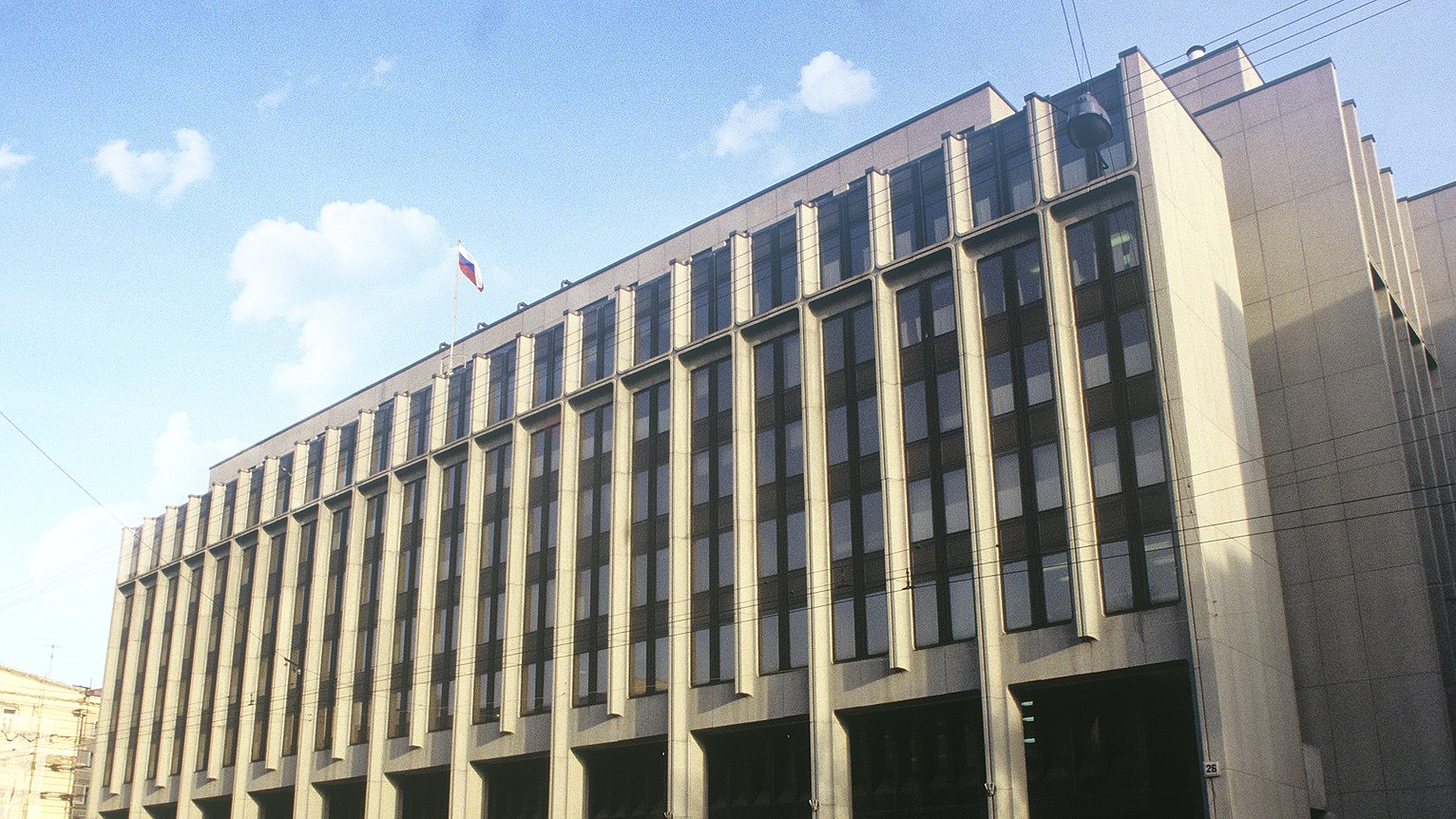
In a statement presented by TASS as a call to migrants, Valentina Matvienko said on 10 November 2026 that people living in Russia must assimilate to its way of life, its culture and its traditions1. Yet the presidential strategy explicitly distinguishes lasting settlement from temporary stays, which do not require full integration2. Between migration control, economic needs and the preservation of national cohesion, Russia is building a policy whose results have yet to be measured.
The essentials
On 10 November 2026, Valentina Matvienko called on people living in Russia to assimilate to the country’s culture. Yet the migration strategy approved by Vladimir Putin distinguishes between those who want to settle permanently and temporary workers who are not seeking full integration. That difference reveals a policy more complex than a simple tightening.
Since 2024, Russia has strengthened residence controls, developed its digital tools and restricted certain jobs open to foreigners. But its economy continues to rely on this labour, particularly in construction and transport. The government is therefore preparing new organised-recruitment mechanisms.
Interior Ministry statistics also show a fall in crimes attributed to foreigners, without establishing any causal link with the reforms. Three levels must be distinguished to understand the Russian model: presidential guidelines, their government timetable and the obligations actually in force.
Key figures in one minute
Two Labour Ministry projections shed light, for their part, on the needs of the economy. They are not targets for admitting migrants and must not be added together: their horizons and methods differ.
| Projection | Figure and scope | Source |
|---|---|---|
| Additional people in employment | 3.1 million by 2030, compared with 2022, all origins combined | Labour Ministry, 29 January 202514 |
| Workforce renewal | 11.5 million departures to replace and 500,000 new jobs to fill by 2032 | Labour Ministry, 5 June 202615 |
Key dates
- 8 August 2024In force Law No. 260-ФЗ: creation of the expulsion regime and the register of controlled persons. 6
- 1 January 2025In force Visa-free stay limited to 90 days cumulated per calendar year. 9
- 5 February 2025In force Application of the expulsion regime and the register. 6
- 1 April 2025
- July–August 2025
- 1 September 2025In force Moscow and its region: pilot of the Amina app, scheduled until 1 September 2029. 12
- 15 October 2025Strategy or plan adopted Decree No. 738: Migration Policy Concept 2026–2030. 2
- 5 December 2025
- 30 December 2025Strategy or plan adopted Government Plan No. 4171-р implementing the Concept. 3
- 15 May 2026Deadline set Plan deadline for draft legislation on organised recruitment. 3
- 1 July 2026Deadline set Plan deadline for a report to the government on enclaves (report not found). 3
- 1 September 2026In force Scope of the Amina app extended. 13
- 30 October 2026Statement or statistic МВД crime statistics, January–September 2026. 5
- 10 November 2026
- 1 December 2026Deadline set Plan deadline for the digital infrastructure of organised recruitment. 3
1. Why is Russia tightening its migration policy?
A call for assimilation, but a more nuanced presidential text
On 10 November 2026, Valentina Matvienko, chair of the Federation Council, spoke during a plenary session of the upper chamber. She referred to several countries she declined to name, which, in her view, let the migration question take its course. She argued that the idea of multiculturalism had not taken root there, and called on people living in Russia to assimilate to the country’s way of life, culture and traditions rather than remain in enclaves living separately. The verb used is indeed ассимилироваться (“to assimilate”).
TASS presents the speech as a call to migrants. In the statement reproduced by the agency, however, Matvienko uses a broader wording: “the people who live in our country”. She also mentions neighbourhoods, but breaks off her sentence without developing the example. She provides neither a definition of multiculturalism nor evidence of its results in the countries concerned1.
A text adopted a year earlier helps clarify the distinctions drawn by the authorities. On 15 October 2025, Vladimir Putin signed Decree No. 738, which approves the Migration Policy Concept for 2026–2030. Its paragraph 22 distinguishes two categories of people:
- those who want to settle permanently in Russia, join its social relationships and become full members of society;
- foreigners who do not tie their future, or their children’s, to Russia and do not plan to integrate fully into Russian society.
For this second category, the text provides for keeping the country open when these people wish, among other things, to work, start businesses, study, travel or maintain family, social and cultural ties. This openness comes with conditions: respecting Russian law, taking care of material and cultural values, the environment and natural resources, and respecting the diversity of regional and ethnocultural ways of life of the population of Russia2.
The distinction is fundamental. The presidential text does not make full assimilation a general condition applying to every foreigner: it distinguishes lasting settlement from a temporary stay that respects the country’s rules.
Security, economy and national cohesion: simultaneous goals
The Concept lists several objectives (§ 20): state security, economic development, scientific and technological development and territorial planning, protection of the national labour market, interethnic and interreligious peace, and preservation of Russian culture and language and of the historical and cultural heritage of the peoples of Russia.
It also sets a priority (§ 21): natural population renewal and national resources must remain the main answer to demographic needs and to the needs of the economy. Labour migration is presented as a complementary instrument, intended for priority sectors as long as a shortage of domestic labour persists. The strategy also acknowledges (§ 7) that the number of foreign workers should continue to grow until 20302.
The government therefore does not intend to end all labour immigration. It seeks to organise entries better, identify individuals, monitor employment conditions and limit settlements that breach residence rules. By 2030, the strategy aims in particular at a reduction in irregular stays and illegal employment, better schooling for foreign children and growth in organised recruitment. In the provisions concerned, these objectives are not accompanied by numerical targets that would allow their achievement to be measured directly.
Three levels of decision not to be confused
The presidential strategy
Sets the guidelines for 2026–2030 and the political and administrative objectives. It does not automatically make every envisaged measure applicable.
The government timetable
Assigns responsibilities and sets deadlines: draft laws, recruitment pilots, digital systems, social and cultural adaptation measures.
The measures in force
Determine the obligations that actually apply to foreigners and employers.
This distinction avoids presenting a recommendation, a draft law or a pilot scheme as a national obligation already in general effect2, 3.
Since 2024, a gradual tightening of controls
The regulatory tightening predates the entry into force of the 2026–2030 strategy. Federal Law No. 260-FZ of 8 August 2024 introduced in particular the expulsion regime (режим высылки) and the register of controlled persons (реестр контролируемых лиц). The system has applied since 5 February 20256.
It concerns foreigners placed under this regime because they have no legal basis for their stay or in other situations provided for by the texts. The restrictions include, among others, a ban on certain banking operations, on acquiring certain property, on registering a marriage and on driving.
Article 31.1 of Law No. 115-FZ sets out the territorial restrictions. A controlled person cannot change residence or place of stay without authorisation from the territorial migration-control body. In principle, they cannot leave the federal subject or municipality where they are staying, except to leave Russia. These restrictions take effect on registration and end when the information concerning the person is removed from the register. They do not apply to all foreigners7, 8.
Other changes affect the conditions of stay:
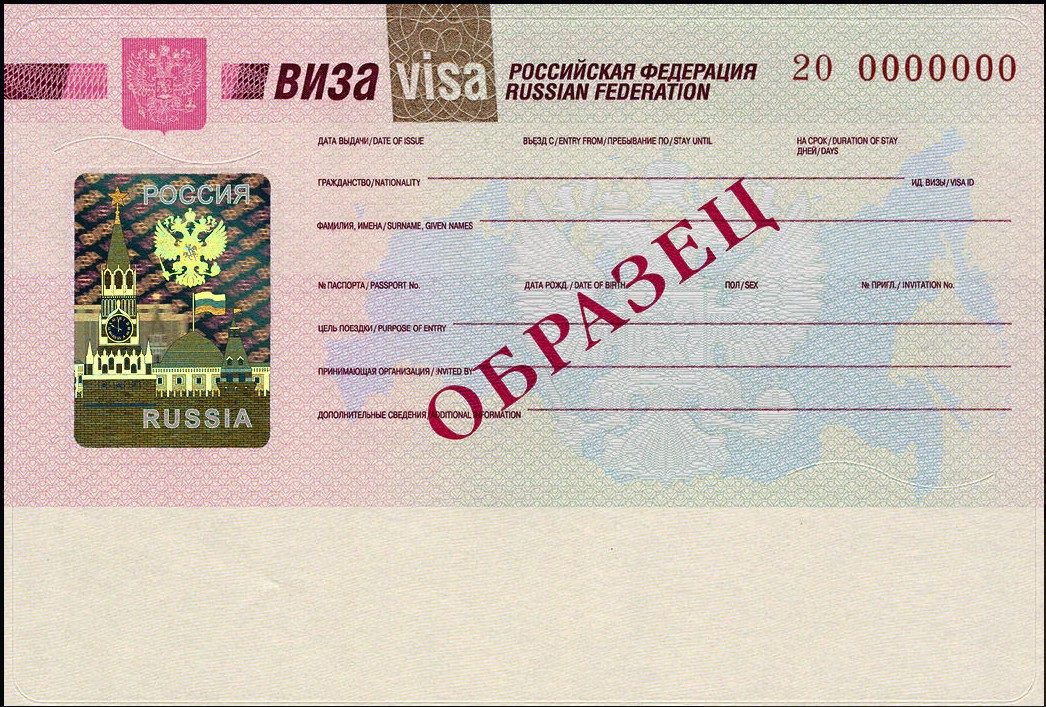
- since 1 January 2025, ordinary visa-free stays have been limited, subject to legal or treaty exceptions, to 90 days cumulated per calendar year9;
- since 1 April 2025, foreign children covered by the new provisions must prove a lawful stay and pass a Russian-language assessment to be admitted to school10. Chapter 3 details the conditions.
Digital tools piloted in the Moscow region
Digitalisation is another strand of the reform. Since 1 September 2025, Moscow and its region have been piloting a migration-monitoring system based in particular on the Amina app. The pilot, scheduled to run until 1 September 2029, covers certain categories of foreigners staying visa-free in the two territories. The app lets them transmit information on their place of stay, notably by geolocation.
Since 1 September 2026, its scope has also included certain foreigners who came visa-free for non-work reasons, notably study or private visits, when their stay exceeds 90 days. Exemptions are provided for, notably, minors, Belarusian citizens and several categories of people with special statuses12, 13.
This is a territorial and category-specific pilot, not an obligation extended to all foreigners present in Russia.
What do the Interior Ministry statistics say?
On 10 November 2026, Interior Minister Vladimir Kolokoltsev presented several results to the Federation Council. According to his speech, nearly 120,000 foreigners in breach of the rules were removed from the territory from January to September 2026, and the ministry issued about 290,000 entry bans of three to ten years. These figures relate to different decisions and operations: they do not add up to a total number of expulsions. The minister also announced about 820,000 foreigners on the register of controlled persons4.
On crime, statistics published by the MVD on 30 October 2026 indicate that crimes committed by foreigners and stateless persons fell by 39.5% from January to September 2026 compared with the same period of 2025 (Kolokoltsev rounds this to 40%). Over the same period, all recorded crimes in Russia fell by 16.3%4, 5. The fall concerning foreigners is therefore sharper than that in total crime.
But no cause and effect between this trend and the migration reforms is demonstrated by these data alone.
2. Can Russia do without foreign workers?
Recruitment needs acknowledged by the authorities
The desire to control immigration better runs up against an economic reality acknowledged by the government: several sectors are struggling to recruit.
On 29 January 2025, before the Federation Council, Labour Minister Anton Kotyakov presented a projection of staffing needs to 2030. According to this forecast, the Russian economy will need 3.1 million additional people in employment compared with 2022. The ministry cites in particular manufacturing, hotels and catering, transport, storage and certain professional and scientific activities among the fields where needs are growing. It also mentions technical trades: mechanics, vehicle repairers, electricians and several construction trades. The minister states that domestic human resources must be the main answer14.
A second projection, set out on 5 June 2026 by Deputy Prime Minister Tatyana Golikova, covers a different horizon: by 2032, according to the Labour Ministry, 11.5 million people retiring will need to be replaced and 500,000 new jobs will need to be filled15.
These two projections must not be added together. The first measures an increase in the number of people in work compared with a reference year; the second distinguishes replacement needs from job creation. Neither corresponds to a government target for admitting migrants.
Construction: needs acknowledged, estimates diverge
Construction is one of the sectors where the presence of foreign employees and economic needs are best documented.
On 19 June 2025, at the St Petersburg International Economic Forum, Valentina Kazakova, introduced as head of the MVD’s Main Directorate for Migration Affairs, said that about three million foreigners work in Russia, including 800,000 in construction. These are headcounts stated in June 2025, not a measure of the proportion of foreign workers in all building jobs16.
On 11 August 2026, Deputy Prime Minister Marat Khusnullin estimated that about 200,000 people are missing in construction. In his interview with TASS, he does not present the use of foreigners as the only answer: he also mentions training, productivity gains and the organisation of the sector17.
Kommersant reported another assessment on 4 September 2026. According to the newspaper, Anton Glushkov, chair of the professional body NOSTROY, puts the staff shortfall at between 200,000 and 400,000 specialists, including manual trades and technical or engineering roles. Kommersant also attributes to him the view that the situation eased somewhat in 2025–2026 for certain manual trades, notably because of fewer new building sites. According to Kommersant, citing Glushkov, the shortfall persists among qualified managers and specialised engineers18.
The two assessments do not necessarily rest on the same occupational categories. They nonetheless converge on one finding: labour availability remains an economic issue acknowledged by Russian public officials and industry representatives.
Transport, logistics, services: a real presence, a weight that is hard to quantify
According to the data presented by Valentina Kazakova in June 2025, about 193,000 foreigners work in transport and storage. This category does not allow drivers, loaders, warehouse staff or couriers to be isolated. The Labour Ministry meanwhile forecasts rising staffing needs in these activities up to 203014, 16.
The presence of foreign workers and the existence of economic needs are therefore documented. By contrast, the available sources do not allow a consistent calculation of the share of jobs held by Central Asian nationals in construction, transport, logistics, catering or services. No sector-by-sector percentage can be put forward with the necessary precision.
Restrictions that differ by activity and territory
Russia does not regulate the employment of foreigners uniformly. For 2026, Government Decision No. 1995 of 5 December 2025 sets ceilings on the use of certain categories of foreign workers in several activities, notably construction, transport and some services. These ceilings are not proportions actually observed. The text includes territorial exceptions and must be applied with special statuses in mind, notably those linked to Eurasian Economic Union agreements19.
Regional authorities also have room to impose restrictions within the framework set by federal law. St Petersburg provides an example, whose timeline has been checked against the texts:
| Date | Text | Effect |
|---|---|---|
| 28 July 2025 | Governor’s Decree No. 60-пг (applicable from 8 August 2025) | Initial restriction on recruiting patent holders in taxis and chauffeur-driven car hire. 20 |
| 11 August 2025 | Decree No. 65-пг amending No. 60-пг | Adds delivery (couriers, home meal delivery). In force from 21 August 2025. 21 |
| 5 December 2025 | Decree No. 89-пг for 2026 | Renews for 2026 the restrictions on taxis and delivery, without introducing delivery for the first time. 22 |
| 10 December 2025 | Administration press release | Announces signature by Governor Alexander Beglov; measure valid until the end of 2026. 23 |
In St Petersburg, restrictions aimed at employers of foreign workers holding a patent (патент) were introduced for taxis in July 2025, then extended to delivery in August 2025. Governor’s Decree No. 89-pg of 5 December 2025 renews them for 2026. They do not apply indiscriminately to all foreign workers20, 21, 22, 23.
Organised recruitment: a response prepared by the government
The presidential strategy is not limited to tightening restrictions. It provides for greater use of organised, targeted recruitment (целевой организованный набор) of foreign workers, in order to link work authorisations more closely to employers’ needs and to vacancies.
Government Plan No. 4171-r of 30 December 2025 sets 15 May 2026 as the deadline for preparing draft legislation to pilot this mechanism, outside Moscow and the Moscow region. It also provides, for 1 December 2026, for a digital infrastructure including an information system and a mobile app. These are administrative deadlines: they do not, on their own, prove that the systems are already operational3.
On 10 November 2026, Vladimir Kolokoltsev presented several elements of the projects prepared by the MVD:
- selection of candidates abroad on the basis of employers’ requests;
- activity based on an employment contract;
- mandatory genomic registration and issuance of an identification card, announced in a draft law;
- digital monitoring;
- a possible future power for governors to impose housing and home-to-work transport obligations on large companies employing more than 250 migrants, on their own initiative or on the recommendation of the MVD and the FSB4.
Can immigration be reduced without weakening economic activity?
Statements by the Labour Ministry, the government and construction representatives show that Russia does not reason solely in terms of migration control: staffing needs, vocational training, company organisation and productivity also feature in official guidelines.
The model being sought therefore does not consist in eliminating all labour immigration, but in favouring better-selected, legally framed immigration linked to identified economic needs.
It remains to be established whether the new mechanisms will reduce irregular employment and meet shortages without creating additional administrative difficulties or increasing workers’ dependence on their employers. This result cannot be deduced from the presidential decree: it will have to be measured after the systems concerned have been applied.
3. Assimilation or integration: what does Russia actually require?
A political word that does not sum up migration law
Valentina Matvienko’s call raises a basic question: what obligations does Russia actually impose on foreigners on its territory? Assimilation and integration do not necessarily describe the same process. The first can refer to the gradual adoption of a society’s dominant cultural references and behaviours; the second more broadly describes participation in its institutions and collective life, without necessarily requiring cultural particularities to be abandoned.
In her speech as reported by TASS, Matvienko calls on people living in Russia to assimilate to the country’s way of life, culture and traditions rather than form enclaves living separately. TASS presents this statement as addressed to migrants; Matvienko herself speaks of “the people who live in our country”1.
The presidential decree of 15 October 2025 takes a more differentiated approach. Its paragraph 22 distinguishes people who wish to become full members of Russian society from those who do not plan to build their future, or their children’s, there. The strategy keeps the country open to this second category, provided it respects the law, cultural and material values, the environment and the diversity of the population’s ways of life2.
The Russian language: obligations that depend on status
Knowledge of Russian is one of the main requirements of migration legislation. Article 15.1 of Law No. 115-FZ (wording in force on 25 October 2026) provides in principle that certain categories of foreigners must prove their command of Russian, their knowledge of Russian history and the basics of national law. The applications concerned include in particular those for:
- a temporary residence permit (разрешение на временное проживание, RVP);
- a permanent residence permit (вид на жительство, VNZ);
- a work authorisation;
- a patent (патент), which is a particular work authorisation and not a permanent residence permit.
Proof can be provided in particular by an examination certificate or by certain school documents recognised by law. The levels required differ according to the document applied for24.
This obligation is not universal. For RVP and VNZ applications, the law provides in particular exemptions for minors, men aged 65 or over, women aged 60 or over and certain family or occupational categories. Other exemptions exist for work authorisations, notably for certain highly qualified specialists. Two foreigners working legally in the same sector may therefore fall under different procedures.
School: Russian becomes an admission condition
Since 1 April 2025, foreign children covered by Law No. 544-FZ of 28 December 2024 must in particular prove that their stay is lawful and pass an assessment of their Russian in order to be admitted to the institutions covered by the scheme10. The Education Ministry specified the test arrangements on 14 March 2025:
- in first grade, the assessment is oral only;
- at other levels, it comprises oral and written tests;
- in case of failure, additional Russian tuition is offered, and the child may retake the test after a minimum period of three months11.
The official aim is to check that pupils have the language skills needed to follow their schooling. But a legal obligation and its practical effectiveness are two different questions. How many children pass the tests? How many take additional tuition? How many are then admitted? How many remain outside the education system? The data checked for this feature do not allow a sufficiently complete answer.
Working in Russia does not imply wanting to settle there
Russian law distinguishes several situations: temporary stay, employment, temporary residence and permanent residence. These categories are not interchangeable. A foreigner authorised to work does not necessarily hold a permanent residence permit; a person legally resident in Russia is not necessarily required to be in employment.
On 10 November 2026, Vladimir Kolokoltsev told the Federation Council that about 50% of foreigners present are legally engaged in an occupation, compared with 45% previously, and that about 670,000 foreigners hold a temporary or permanent residence status. These indicators concern different situations. The 50% who are not legally working cannot be equated with a population in an irregular situation: this category may include people legally present for family, school or other reasons.
The minister also states an explicit MVD objective: to separate labour immigration from settlement in Russia4. This orientation matches paragraph 22 of the presidential strategy.
Becoming a Russian citizen: broader conditions
Acquiring citizenship falls under a framework distinct from work and residence. Federal Law No. 138-FZ of 28 April 2023 sets the conditions for naturalisation. Under its article 15, in the ordinary procedure, an adult foreigner or stateless person with legal capacity must in particular:
- have resided permanently in Russia for five years from the decision granting a VNZ;
- have a command of Russian and know the country’s history and the basics of its law;
- undertake to respect the Constitution and take the citizenship oath;
- not fall under a legal ground for rejecting the application25.
The scheme includes exceptions. Article 15 notably exempts people aged 70 or over and those in disability group I from the language, history and legal knowledge requirements. These exemptions must not be confused with those for residence permits, whose age thresholds are different.
Article 16 provides special routes. They concern in particular people born or permanently resident in the RSFSR who held Soviet citizenship, certain people with direct-line ancestors born or resident in historical territories precisely defined by law, and certain family and occupational situations26.
Cultural adaptation: between strategy and public programmes
The 2026–2030 strategy also gives a place to the social and cultural adaptation of foreigners: Decree No. 738 provides for developing knowledge of Russian, of the legal framework and of the country’s social norms2. Government Plan No. 4171-r organises several actions:
- point 35: a pilot project of social and cultural adaptation infrastructure in certain federal subjects;
- point 36: adaptation courses, with the possible participation of civil-society organisations and employers;
- point 37: information campaigns on living conditions in Russia, the ethnocultural diversity of its peoples and the norms of national law.
The Federal Agency for Ethnic Affairs (FADN) takes part in this programme with regional authorities3.
These are scheduled actions. They prove neither that the infrastructure has been extended to all regions nor that all foreigners actually take adaptation courses. The number of people trained, territorial coverage and results will have to be checked separately.
- 1Temporary worker
Lawful stay and employment; language obligations vary depending on the document applied for. 24
- 2Lasting residence
RVP and VNZ: broader requirements (Russian, history, basics of law), with exemptions depending on age and situation. 24
- 3
4. Can a multinational Russia reject multiculturalism?
National diversity belongs to the constitutional framework
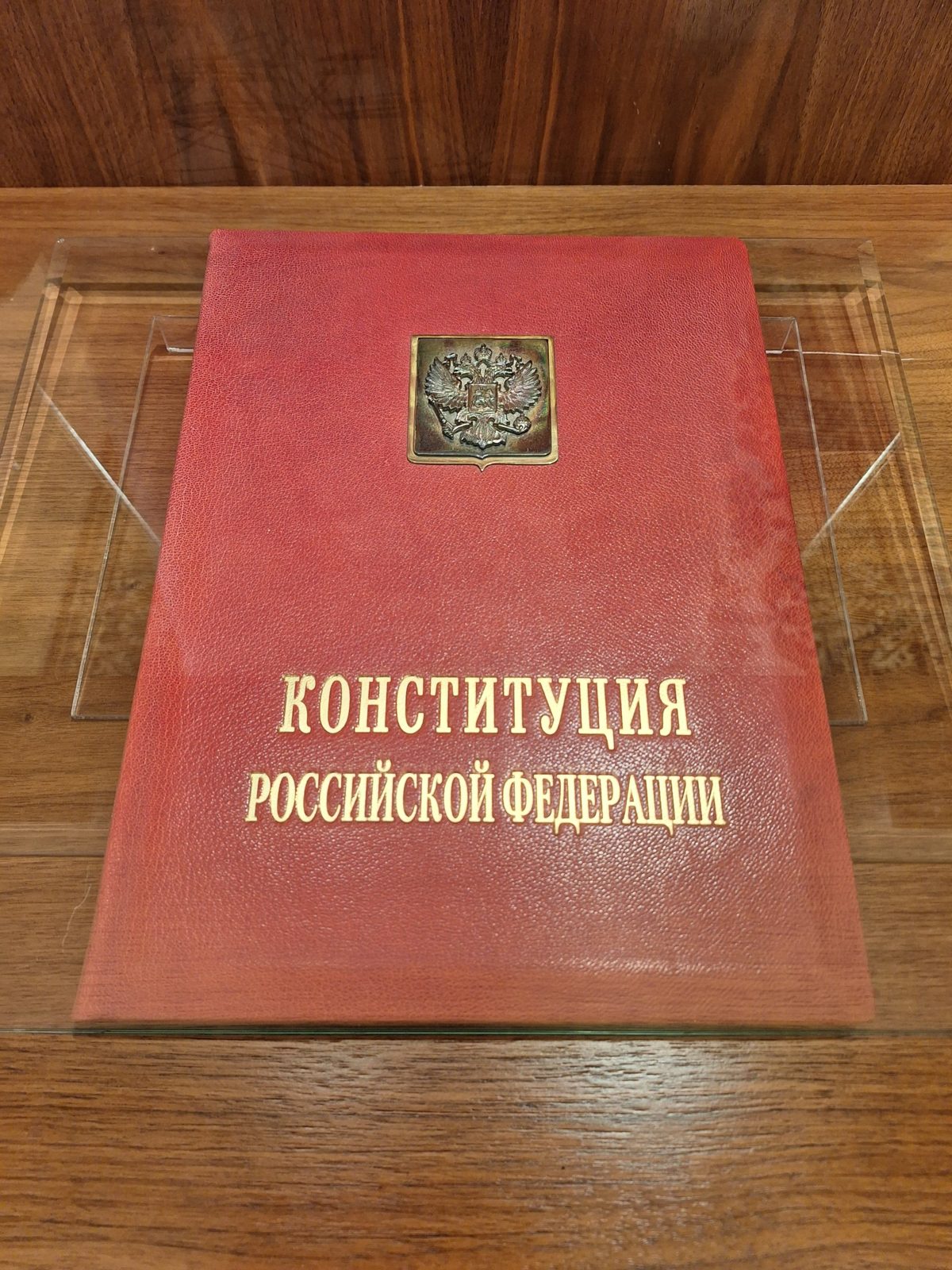
Valentina Matvienko’s criticism of multiculturalism might seem hard to reconcile with Russia’s historical make-up. Yet the Federation does not define itself constitutionally as an ethnically or culturally homogeneous state.
The preamble of the Constitution of 12 December 1993 opens with the words “We, the multinational people of the Russian Federation” (Мы, многонациональный народ Российской Федерации). Article 3 specifies that this multinational people is the bearer of sovereignty and the sole source of power27.
This recognition is supplemented by individual and collective guarantees:
- article 26: everyone’s right to determine their national affiliation, to use their mother tongue and to choose freely their language of communication, education and creative work;
- article 68: a special status for Russian, while allowing republics to have their own official languages;
- article 69: protection of the cultural identity of the peoples and ethnic communities of Russia and preservation of their ethnocultural and linguistic diversity27.
Russian, the official language of a multinational state
The constitutional revision approved on 1 July 2020 introduced a particular wording into article 68. Its first paragraph establishes that Russian is the official language of the Federation throughout its territory, as the language of the state-forming people, which is part of a multinational union of equal peoples. The grammatical precision matters: it is the state-forming people, not the Russian language itself, that is presented as belonging to this union.
The following paragraphs allow republics to establish their own official languages, used alongside Russian in their institutions, guarantee all the peoples of Russia the right to preserve their mother tongue and provide for state protection of the culture of the multinational people27.
Article 69: three protections not to be confused
- The first paragraph specifically concerns the rights of the numerically small indigenous peoples of Russia.
- The second provides for state protection of the cultural identity of all peoples and ethnic communities of the Federation and guarantees the preservation of their ethnocultural and linguistic diversity.
- The third concerns support for compatriots living abroad, notably the protection of their rights and the preservation of their all-Russian cultural identity (общероссийской культурной идентичности)27.
The individual right to use one’s mother tongue falls under article 26; general language guarantees appear in article 68.
Historical multinationality and international immigration
The Federation historically comprises peoples and communities of different national affiliations. Their presence does not necessarily result from contemporary international immigration.
What Matvienko says
On 10 November 2026, Valentina Matvienko said that the idea of multiculturalism had not taken root in several countries she declined to name. She mentioned neighbourhoods, without developing the example, then called on people living in Russia to assimilate to the country’s way of life, culture and traditions rather than remain in enclaves living separately1. Her statement is not a general definition of multiculturalism, and it does not allow the causes or results of the migration policies of the countries mentioned to be established.
The presidential strategy offers a partial answer. It seeks to prevent spatial segregation, strengthen knowledge of Russian and promote cultural adaptation. It also provides, however, for keeping the country open to foreigners who do not wish to integrate fully, provided they respect the legal framework, cultural and material values and the diversity of regional and ethnocultural ways of life. It therefore sets no uniform requirement of full assimilation2.
Constitutional guarantees, an essential parameter
Several provisions frame the rights of people legally resident in Russia:
- article 19: equality before the law and the courts, and equality of rights and freedoms without distinction as to, among other things, nationality, language, origin or religion;
- article 27: in principle, freedom of movement and choice of place of stay and residence for anyone lawfully on the territory;
- article 28: freedom of conscience and religion;
- article 62, paragraph 3: in principle, the same rights and obligations as citizens for foreigners and stateless persons, except as established by federal law or international treaties27.
These guarantees must be reconciled with the provisions of migration law. By their mere existence they do not forbid every legal restriction on stay or residence; nor do they allow it to be presumed that every future measure will comply with all the rights applicable.
Decree No. 738 provides, in its paragraph 29, for the development of a mechanism allowing certain territorial restrictions on migration registration and residence to be considered2. Plan No. 4171-r for its part provides for the preparation of proposals to amend legislation aimed at preventing enclaves and spatial segregation; the deliverable expected for 1 July 2026 is a report to the government, not a draft law already tabled3. These orientations do not prove the existence of an already applied national obligation of residential dispersal. The scope of each restriction will have to be examined from its legal basis, its addressees, its exceptions and its actual implementation.
Citizenship and national belonging: two distinct notions
Article 6 of the Constitution specifies that citizenship of the Federation is acquired and lost in accordance with federal law and that it is “single and equal irrespective of the grounds of its acquisition”. Article 19 guarantees equality of rights without distinction as to, among other things, nationality or origin27. Russian citizenship is therefore a legal status defined by the Constitution and the law, distinct from an individual’s ethnocultural affiliation.
A foreigner who acquires citizenship changes legal status and becomes a member of the community of Russian citizens, though this status alone does not allow one to infer their degree of cultural identification or sense of belonging.
Between constitutional principles and concrete application
Russia has a constitutional framework that explicitly recognises national and linguistic diversity. It also has a migration strategy that seeks to strengthen command of Russian, lawful stay and foreigners’ participation in a common collective framework. These two orientations are not necessarily incompatible. The difficulty appears when general goals — assimilation, social cohesion, prevention of enclaves — have to become concrete administrative measures.
5. Migrant enclaves: what reality lies behind the rhetoric?
A concern written into the presidential strategy
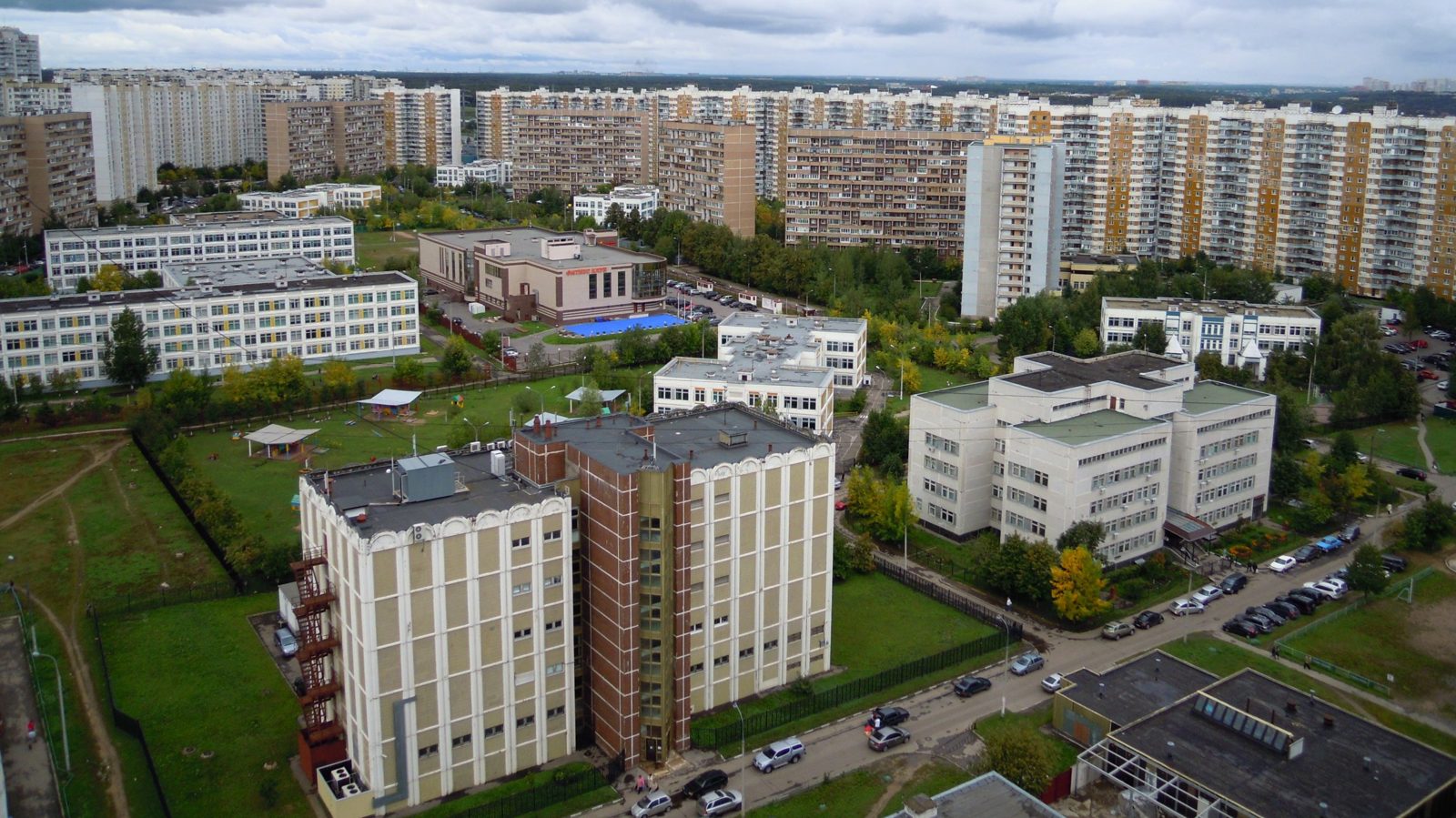
Decree No. 738 of 15 October 2025 provides, in paragraph 28, for measures to prevent spatial segregation, the formation of ethnic enclaves and the marginalisation of foreigners on the territory as well as of people who have acquired Russian citizenship. Paragraph 29 provides for the creation of a legal mechanism allowing regional authorities to establish certain restrictions on migration registration and residence in specified municipalities2.
These provisions are strategic guidelines. They do not demonstrate the existence of a national residential-dispersal obligation already applied.
Government Plan No. 4171-r of 30 December 2025, point 4, provides for the preparation of proposals to amend legislation, intended to allow regional executive authorities to establish restrictions against the formation of enclaves and spatial segregation. The officials designated are the Interior Ministry (MVD), the Federal Security Service (FSB) and the Ministry of Economic Development, with the participation of the regions. The deliverable expected for 1 July 2026 is a report to the government, not a draft law already tabled. This report was not found in the sources consulted3.
What is a “migrant enclave”?
The difficulty begins with defining the phenomenon. A residential concentration of foreign nationals, a neighbourhood grouping residents who share an origin or a language, a situation of social segregation and an enclave where public institutions would face particular difficulties are not necessarily identical realities.
Yet the texts examined provide no national statistical definition, with criteria and thresholds, that would allow “migrant enclaves” to be identified consistently. The strategy sets a prevention goal; it does not, on its own, provide the instruments to measure the phenomenon in each municipality.
The MVD recommendations: what is established and what is not
On 10 November 2026, Interior Minister Vladimir Kolokoltsev spoke to the Federation Council. In the full transcript of his speech published by MVD Media, he presents several migration-control systems and organised-recruitment projects4.
The same day, two media outlets reported recommendations aimed at breaking up migrant enclaves:
- Kommersant reports that the Interior Ministry has prepared recommendations aimed at breaking up migrant enclaves (the paper uses the term разобщение), that they have been approved by the government and that they will shortly be sent to the regions29.
- RBC states that, according to Kolokoltsev, these recommendations were prepared on the instructions of Dmitry Medvedev, deputy chair of the Russian Security Council. The minister is also said to have specified that they were approved by the government and would shortly be sent to the regions30.
These reports must be distinguished from the official text. The passage on the recommendations does not appear in the transcript of the speech published by MVD Media. These are journalistic accounts and remarks attributed to the minister by journalists, not direct quotations from the official speech consulted. They establish that an initiative was announced publicly, but the document containing the recommendations has not been found. It is therefore impossible, at this stage, to describe precisely its content, territorial scope, implementation arrangements and any binding force.
Employers could receive new responsibilities
Kolokoltsev’s official speech contains a better-documented proposal. As part of the projects to reform organised recruitment, the minister raises the possibility of giving governors new powers over companies employing more than 250 migrant workers: they could be subject to obligations to house their foreign employees and to provide transport between housing and workplace. These requirements could be set on governors’ initiative or on the recommendation of the MVD and the FSB4.
These provisions appear in a set of projects. They are not general obligations already applicable.
Obninsk: a cited example, not a statistically demonstrated enclave
The question of enclaves was already present in Russian debate before 10 November 2026. On 3 December 2024, Kommersant reported remarks by Valery Fadeyev, chair of the Presidential Council for Civil Society and Human Rights (SPCh), made in an interview with RBC. He called for stricter rules on admitting migrants and granting citizenship. He cited the town of Obninsk, in the Kaluga region, as an example of an ethnic enclave, and mentioned problems in the schooling of migrants’ children28.
These remarks are not a local study. The article provides neither a geographical delimitation of the enclave mentioned, nor consistent residential data, nor a method for measuring segregation. It therefore does not allow one to claim that Obninsk is a scientifically established ethnic enclave.
More generally, the research carried out for this feature did not identify a local case study combining sufficiently detailed public data, a geographical delimitation, an explicit methodology and an evaluation of any measures applied. Isolated news items or political statements cannot replace an urban survey.
Preventing enclaves: effectiveness still to be demonstrated
Russian strategy contains two complementary orientations: promoting the social and cultural adaptation of foreigners and preparing instruments to prevent certain residential concentrations.
The constitutional framework must be taken into account. Article 27 guarantees, in principle, freedom of movement and the choice of place of stay and residence to anyone lawfully on the territory27. The particular restrictions provided for by migration legislation must be distinguished from this general guarantee.
6. Russia and France: two migration policies, what lessons?
For France, this part relies exclusively on institutional sources (INSEE, Eurostat, Légifrance, the Interior Ministry).
Comparing policies, not incompatible figures
The comparison first requires defining the populations concerned. On 10 November 2026, the MVD stated that about six million foreigners were present in Russia on 1 October 20264. In France, INSEE distinguishes two statistical notions: an immigrant is a person born a foreign national abroad and living in France, who may later have acquired French nationality; a foreigner is a person who does not hold French nationality, whether born in France or abroad. The two categories overlap only partially31.
The French Interior Ministry also publishes statistics on residence permits41, another administrative category, and Eurostat publishes data on residence permits that concern populations defined by European statistical rules, notably third-country nationals32. These indicators cannot be compared directly with the stock of foreigners present in Russia. Setting the MVD’s six million against the number of valid French permits would not rigorously measure the differences between the two countries.
France also imposes language and civic requirements
In Russia, article 15.1 of Law No. 115-FZ requires, for certain categories of foreigners, proof of knowledge of Russian, history and the basics of national law in several work and residence procedures, with exemptions24.
In France, Law No. 2024-42 of 26 January 2024 strengthened several obligations linked to republican integration33. Since 1 January 2026, the first issue of a multi-year residence card has in particular been conditional, for the categories concerned, on proof of A2-level French and passing a civics exam34, 35. For certain resident cards, the language level required is B1, accompanied by a civic assessment36. These provisions include exemptions and adjustments and do not apply uniformly to all foreigners.
Citizenship: two systems of conditional access
The distinction between residence and citizenship exists in both countries. In Russia, Law No. 138-FZ of 28 April 2023 provides, in the ordinary naturalisation procedure, conditions of permanent residence, Russian language, history, knowledge of the basics of the law and respect for the Constitution, with special routes and exemptions25.
In France, Decree No. 2025-648 of 15 July 2025 raises to B2 level the French required for naturalisation, reinstatement and declaration of nationality by marriage to a French spouse. The provisions concerned came into force on 1 January 202637.
But French levels and Russian exams do not rest on identical certification systems, and residence conditions, family situations, exemptions and special routes also differ.
Employers, an important actor in both countries
Russia is preparing a strengthened organised-recruitment scheme in which employers’ needs would play a decisive role. The projects presented by Kolokoltsev on 10 November 2026 provide in particular for mechanisms of identification, monitoring and company responsibility. These are announced measures, not all of which are yet in force4.
In France, the Labour Code provides that a foreigner entering to work as an employee must present the required documents as well as an employment contract endorsed by the administrative authority or a work authorisation, in the situations covered by this scheme38. Companies thus also take part in the working of the French lawful-recruitment system.
Conditions nevertheless vary by the person’s nationality and status. European free movement provides France with a particular framework, which cannot be equated with the rules applying to third-country nationals. Russia, for its part, has special regimes for nationals of the Eurasian Economic Union. The two sets do not cover the same countries and do not rest on identical rules.
Family reunification: distinct frameworks
In France, article L434-2 of the Code of Entry and Residence of Foreigners and of the Right of Asylum (CESEDA) provides, in the ordinary family-reunification regime, for at least eighteen months of lawful stay under an eligible permit. The scheme covers in particular the spouse and children meeting the legal conditions39. Article L434-7 provides for requirements of stable and sufficient resources, suitable housing and respect for the essential principles of family life in France40. These provisions do not cover all family situations, notably those governed by special regimes.
In Russia, paragraphs 16 and 28 of the 2026–2030 strategy envisage measures to limit the stay of family members of foreigners who work or study, where those family members themselves neither work nor are in training2. This is a strategic orientation: it does not demonstrate that a general ban on all the family members concerned is already applicable.
What is comparable, and what is not
| What is comparable | What is not directly comparable |
|---|---|
| Language requirements for certain residence statuses. | French levels A2, B1 or B2 and Russian exams, whose certification systems differ. |
| Civic conditions linked to residence and to acquiring citizenship. | The political notions of assimilation and integration when they do not have the same legal definition. |
| The role of employers in recruitment subject to authorisation. | The free-movement regimes of the European Union and the Eurasian Economic Union, which do not have the same scope. |
| Legal conditions of temporary stay and lasting residence. | Categories of visas, permits and authorisations when they cover different populations. |
| Rules on families, based on provisions actually applicable. | Russian strategic orientations still being prepared and French obligations already in force. |
| Policies against irregular employment, on a consistent statistical scope. | Stocks of people, flows of entries and numbers of residence permits, which measure different phenomena. |
| Language, schooling and cultural-adaptation policies. | The results of the fight against enclaves, in the absence of comparable indicators and methods. |
| Staffing needs and economic recruitment instruments. | Shortage estimates covering different periods, trades and methods. |
Two policies facing similar trade-offs
In its 2026–2030 strategy, Russia asserts a determination to distinguish better between temporary labour immigration and permanent settlement, to develop organised recruitment and to prevent residential concentrations. France has a republican integration framework with language and civic obligations, alongside a system of residence permits and work authorisations.
These institutional differences are documented. They do not, however, allow a conclusion on their own that one model is more effective than the other. One would need comparable results on employment conditions, lawful stay, language learning, schooling and settlement trajectories. Yet several of these data remain insufficiently documented or unharmonised.
Conclusion: a model with its own instruments, shared trade-offs
But several trade-offs remain between staffing needs, control of residence, language requirements and legal guarantees.
Russia and France thus face comparable trade-offs — economic needs, migration control and integration — without necessarily using the same instruments. The comparability of their results cannot, however, be established with the data examined: statistical definitions, residence statuses and the indicators available are not sufficiently harmonised.
The effectiveness of the Russian model will have to be judged from measurable results: lawful employment, whether recruitment needs are met, language proficiency, schooling, housing conditions and changes in irregular situations. Political intentions, legal provisions and their application must therefore remain three distinct objects of analysis.
The question is not only whether Russia adopts different instruments. It is whether, on the basis of verifiable data, those instruments allow the authorities to reconcile their stated goals better.
Limits and open points
This feature distinguishes what is confirmed by an official text or statement, what is reported by media and what remains to be demonstrated. Here is what, as of 11 November 2026, it does not allow to be established.
| Point | What is documented | What remains open |
|---|---|---|
| Matvienko’s statement | Remarks reported by TASS on 10 November 2026. | The “migrants” framing is TASS’s; Matvienko speaks of “the people who live in our country”. The reference to migration policy in the quotation is editorial. |
| 6 million foreigners, 7 million entries | Ministry figures (stock at 1 October; flow January–September 2026). | They give neither a number of workers, nor a number of immigrants settled for the long term, nor a number of distinct people. |
| 50% versus 45% | МВД statement. | The period of the earlier rate is not specified. The remaining 50% are not automatically irregular. |
| 820,000 on the register | Ministry figure as of 10 November 2026. | The register changes. Those on it are not all illegal workers or people already expelled. |
| −39.5% in crimes attributed to foreigners | МВД statistics, January–September 2026, with −16.3% for all crimes. | Criminal categories and the counting method have not been examined. No causality with the tightening is demonstrated. A figure of “20,000 crimes, 3.4% of the total” was not retained: its denominator is not established. |
| Labour needs | Labour Ministry projections; estimates attributed to Khusnullin and to NOSTROY. | The projections are not targets for admitting migrants. Occupational scopes may differ. |
| Central Asian labour by sector | Presence established. | No consistent data by nationality and activity: no sector-by-sector percentage is published here. |
| Organised recruitment, genomic registration, 250-worker threshold | Projects and powers announced by Vladimir Kolokoltsev on 10 November 2026. | Definitively adopted texts remain to be checked before speaking of applicable obligations. |
| Anti-enclave recommendations | Accounts by Kommersant and RBC, 10 November 2026. | The document has not been found; the passage does not appear in the MVD Media transcript. The role attributed to Dmitry Medvedev is reported by RBC. |
| Plan No. 4171-р, point 4 | Deadline for the report to the government: 1 July 2026. | The report has not been found; any legislative follow-up is unknown. |
| Obninsk and “enclaves” | Statement by Valery Fadeyev reported by Kommersant (3 December 2024). | This is not a study. No national statistical definition of enclaves is available. |
| School Russian tests, adaptation programmes | Legal framework and arrangements documented. | Pass rates, actual schooling, regional coverage and number of participants remain to be established. |
| Uzbek recruitment | Two incompatible figures were found. | They are left out of the feature until their administrative definitions are known. |
| France–Russia comparison | Partial legal comparison. | No comparison of results, stocks, flows or residence permits, nor of removal procedures and housing policy. The versions in force of the French articles must be re-read at the date of reading. |
Glossary
- Migration Policy Concept
- 2026–2030 strategic text approved by presidential Decree No. 738 of 15 October 2025.
- Plan No. 4171-р
- Government plan of 30 December 2025 that assigns responsibilities and deadlines for applying the Concept.
- МВД (MVD)
- Russian Interior Ministry.
- ФСБ (FSB)
- Federal Security Service.
- СПЧ (SPCh)
- Presidential Council for Civil Society and Human Rights.
- ФАДН (FADN)
- Federal Agency for Ethnic Affairs.
- RVP
- Temporary residence permit (разрешение на временное проживание).
- VNZ
- Permanent residence permit (вид на жительство).
- Patent
- Particular work authorisation for certain foreigners; it is not a permanent residence permit.
- Register of controlled persons
- Register created by Law No. 260-ФЗ; it entails restrictions for the people on it.
- Expulsion regime
- Regime applicable to certain foreigners lacking a legal basis for their stay or in other situations provided for by the texts.
- Amina
- App used in the migration-monitoring pilot in Moscow and its region.
- NOSTROY
- Russian construction industry body.
- Eurasian Economic Union
- Regional union whose nationals benefit from special regimes in Russia.
- CESEDA
- Code of Entry and Residence of Foreigners and of the Right of Asylum (France).
- Stock, flow, register, permit
- A stock counts people at a date; a flow counts events over a period; a register is an administrative list; a permit is a residence document. These measures cannot be added together.
Sources
References as of 11 November 2026. Legal sources point to the texts or dated versions used in the investigation. Links are given without tracking parameters. French sources are exclusively institutional.
Sources — Russian texts and statements
- TASS — Statement by Valentina Matvienko on assimilation.
tass.ru - Russian Presidency — Decree No. 738 and Migration Policy Concept 2026–2030.
garant.ru - Russian Government — Plan No. 4171-р implementing the Concept.
garant.ru - МВД — Full speech by Vladimir Kolokoltsev to the Federation Council.
mvdmedia.ru - МВД — National crime statistics, January–September 2026.
mvdmedia.ru - Federal Law No. 260-ФЗ — Migration control reform.
base.garant.ru - Federal Law No. 115-ФЗ, article 31.1 — Expulsion regime and restrictions.
consultant.ru - МВД — Official explanations on the register of controlled persons.
consultant.ru - Federal Law No. 115-ФЗ, article 5 — Duration and conditions of temporary stay.
base.garant.ru - Federal Law No. 544-ФЗ — School admission of foreign children.
base.garant.ru - Russian Ministry of Education — Organisation of Russian tests for foreign children.
edu.gov.ru - Federal Law No. 121-ФЗ — Migration-control pilot in Moscow and its region.
consultant.ru - МВД — Changes applicable from 1 September 2026, notably concerning Amina.
mvdmedia.ru - Russian Ministry of Labour — Staffing-needs forecast presented by Anton Kotyakov.
mintrud.gov.ru - Russian Ministry of Labour — Workforce-replacement forecasts, speech by Tatyana Golikova.
mintrud.gov.ru - RIA/Prime — Statement by Valentina Kazakova on the employment of foreign workers.
1prime.ru - TASS — Interview with Marat Khusnullin on construction needs.
tass.ru - Kommersant — Statements by Anton Glushkov, chair of NOSTROY.
kommersant.ru - Russian Government — Decision No. 1995 on sectoral ceilings for employing foreign workers in 2026.
consultant.ru - St Petersburg — Governor’s Decree No. 60-пг on taxis.
base.garant.ru - St Petersburg — Decree No. 65-пг extending the restrictions to delivery.
base.garant.ru - St Petersburg — Decree No. 89-пг renewing the restrictions for 2026.
base.garant.ru - St Petersburg Administration — Press release on Governor Alexander Beglov’s decision.
gov.spb.ru - Federal Law No. 115-ФЗ, article 15.1 — Language, history and legal knowledge.
consultant.ru - Federal Law No. 138-ФЗ, article 15 — Ordinary conditions for access to citizenship.
consultant.ru - Federal Law No. 138-ФЗ, article 16 — Special categories of access to citizenship.
consultant.ru - Russian Ministry of Justice — Constitution of the Russian Federation.
minjust.gov.ru - Kommersant — Statements by Valery Fadeyev on enclaves and Obninsk.
kommersant.ru - Kommersant — MVD recommendations to break up migrant enclaves.
kommersant.ru - RBC — MVD recommendations, role attributed to Dmitry Medvedev and statements by Kolokoltsev.
rbc.ru
Sources — French and European, institutional only
- INSEE — Statistical definition of an immigrant.
insee.fr - Eurostat — Residence permits held by third-country nationals.
ec.europa.eu - Légifrance — Law No. 2024-42 to control immigration and improve integration.
legifrance.gouv.fr - Légifrance — CESEDA, article L433-4.
legifrance.gouv.fr - Légifrance — CESEDA, article R433-5.
legifrance.gouv.fr - Légifrance — CESEDA, article R413-15.
legifrance.gouv.fr - Légifrance — Decree No. 2025-648 on nationality procedures.
legifrance.gouv.fr - Légifrance — Labour Code, article L5221-2.
legifrance.gouv.fr - Légifrance — CESEDA, article L434-2.
legifrance.gouv.fr - Légifrance — CESEDA, article L434-7.
legifrance.gouv.fr - French Interior Ministry — Report to Parliament on 2025 migration data.
immigration.interieur.gouv.fr